Gears of War: E-Day Versus Multiplayer: Modes, Maps and Ranked Explained
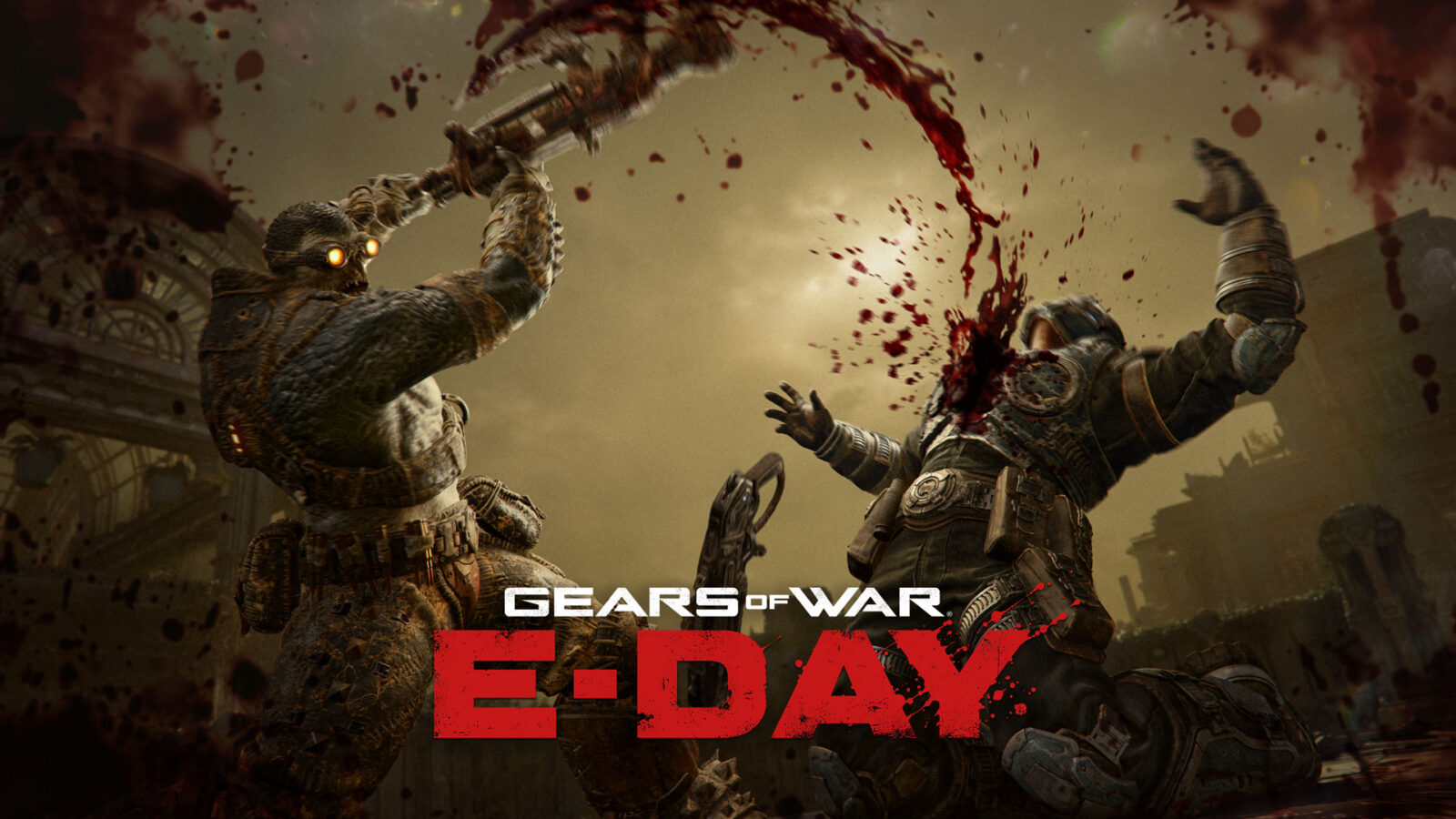
Gears of War: E-Day's Versus multiplayer is live with four 4v4 modes — Team Deathmatch, Conquest, and the new Demolition and Crucible — across six launch maps set in Kalona. Here's every mode, map, and how Ranked and Social play work.
Gears of War: E-Day launched on October 6, 2026 as an Xbox Series X|S and PC console exclusive, and alongside its prequel campaign it brought back the series' classic 4v4 Versus multiplayer. If you have already cleared a round of Horde Siege and want to know what the competitive side of E-Day actually offers, here is every Versus mode, every launch map, and how ranked play works.
Versus sits apart from the 12-player, three-squad Horde Siege mode and from the four-player campaign co-op — it is the traditional Gears formula of two teams of four, cover-based gunplay, and the chainsaw Lancer, rebuilt for E-Day's prequel setting in the city of Kalona.
1. What Versus Is and Where It Sits in E-Day's Multiplayer
The Coalition split E-Day's online offering into two pillars: Horde Siege, the cooperative PvE mode covered in our Horde Siege classes and strategy guide, and Versus, the competitive PvP mode this guide focuses on. Versus is a straight 4v4 affair, keeping the series' symmetrical map philosophy while adding new traversal options and more vertical spaces than earlier Gears games, according to the developers' own multiplayer deep dive.
Every Versus match takes place in and around Kalona, the same war-torn city featured in E-Day's campaign, which we cover in detail in our story and characters breakdown. The weapon set and movement options match the campaign's combat systems, which we explain fully in our combat and weapons guide, so anything you learn fighting the Locust carries over directly into fighting other players.
2. The Four Versus Modes at Launch
E-Day ships with four Versus modes. Two are series staples, and two are new to the franchise.
Team Deathmatch
The classic mode returns with a twist: instead of fixed spawn points that let an opposing team camp a corner of the map, E-Day uses dynamic respawns that bring eliminated players back into the fight near wherever the action is currently heaviest. Each team works down a shared pool of lives, and the side that depletes the other's pool first wins.
Conquest
Conquest is The Coalition's take on King of the Hill, but with a key change: rather than a single capture zone that deactivates and respawns somewhere else on the map, Conquest keeps several scoring zones active throughout the round. Points accrue for as long as your team holds a zone, which keeps fights spread across the map instead of funneling everyone into one chokepoint.
Demolition
Demolition is new to Gears of War. One team attacks and must secure and plant a bomb at one of two bombsites while the other team defends, with sides swapping across the match — a structure familiar from other tactical shooters but built around E-Day's cover system and heavier weapons.
Crucible
Also new, Crucible has both teams fighting to carry and hold a Power Core — a piece of heavy COG hardware — inside a scoring zone. Whoever controls the Power Core racks up points, which makes it as much about zone control as about the core itself.
3. The Six Launch Maps
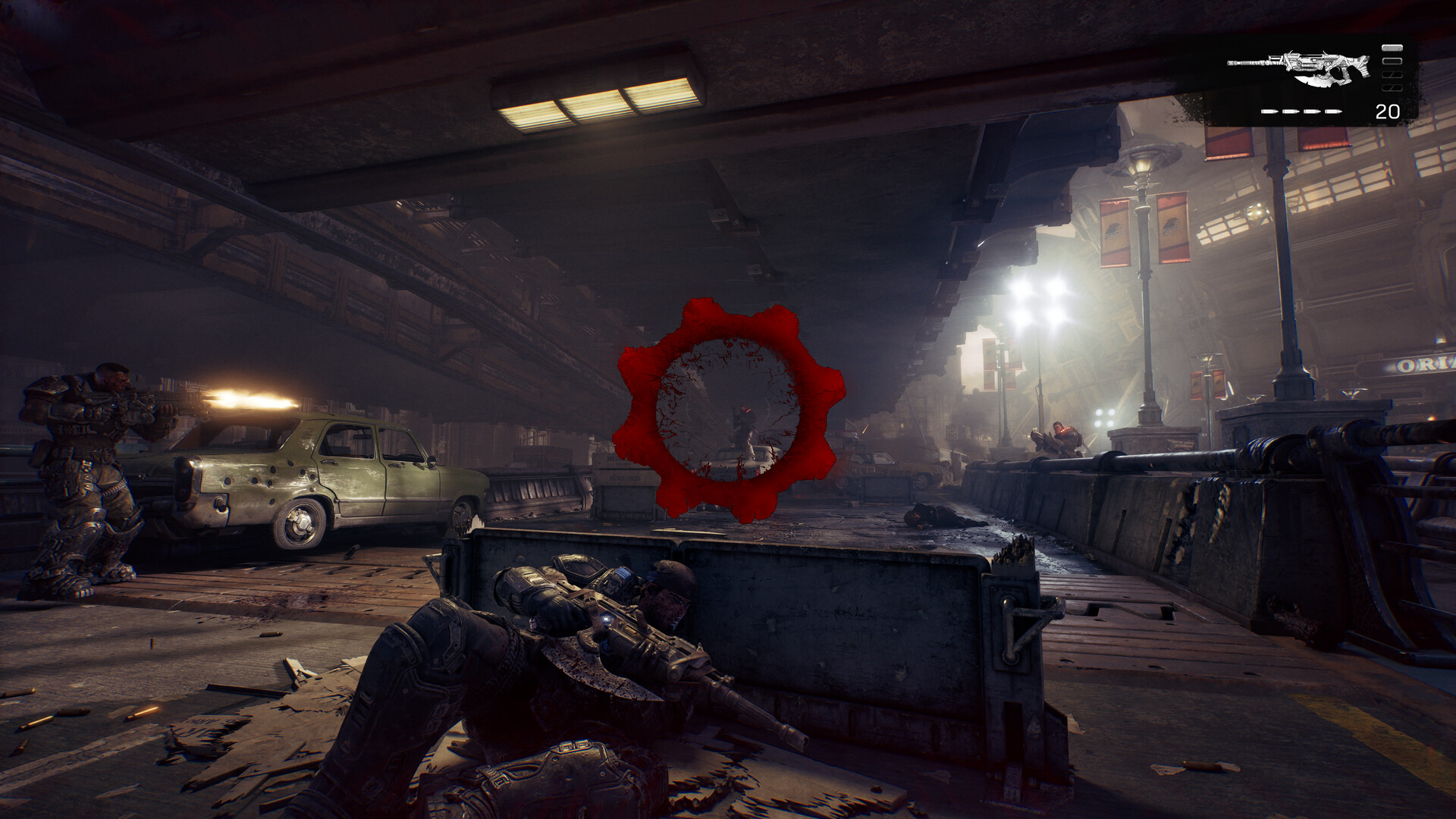
Versus launches with six maps, all set in and around Kalona: Outpost, Battleship, Park, Precinct, Market, and Skyward. The Coalition has described them as following the series' traditional symmetrical map design — both teams start with mirrored sightlines and cover options — while adding new vertical routes and traversal paths that previous Gears Versus maps didn't have. Because the maps share Kalona's visual identity with the campaign, you'll recognize the same industrial rail bridges, flooded streets, and COG-era architecture from the single-player story.
4. Getting Started: What to Expect in Your First Matches
If your last Gears Versus experience was years ago, a few things feel different right away. The dynamic respawn system in Team Deathmatch means fights rarely settle into a stalemate at one chokepoint — expect the action to roam across the whole map rather than staying locked to a single lane. The added verticality on the six launch maps also means angles from rooftops and elevated walkways matter more than in older Gears entries, so it's worth a lap around each map in Social or Combat Training before you queue into Ranked.
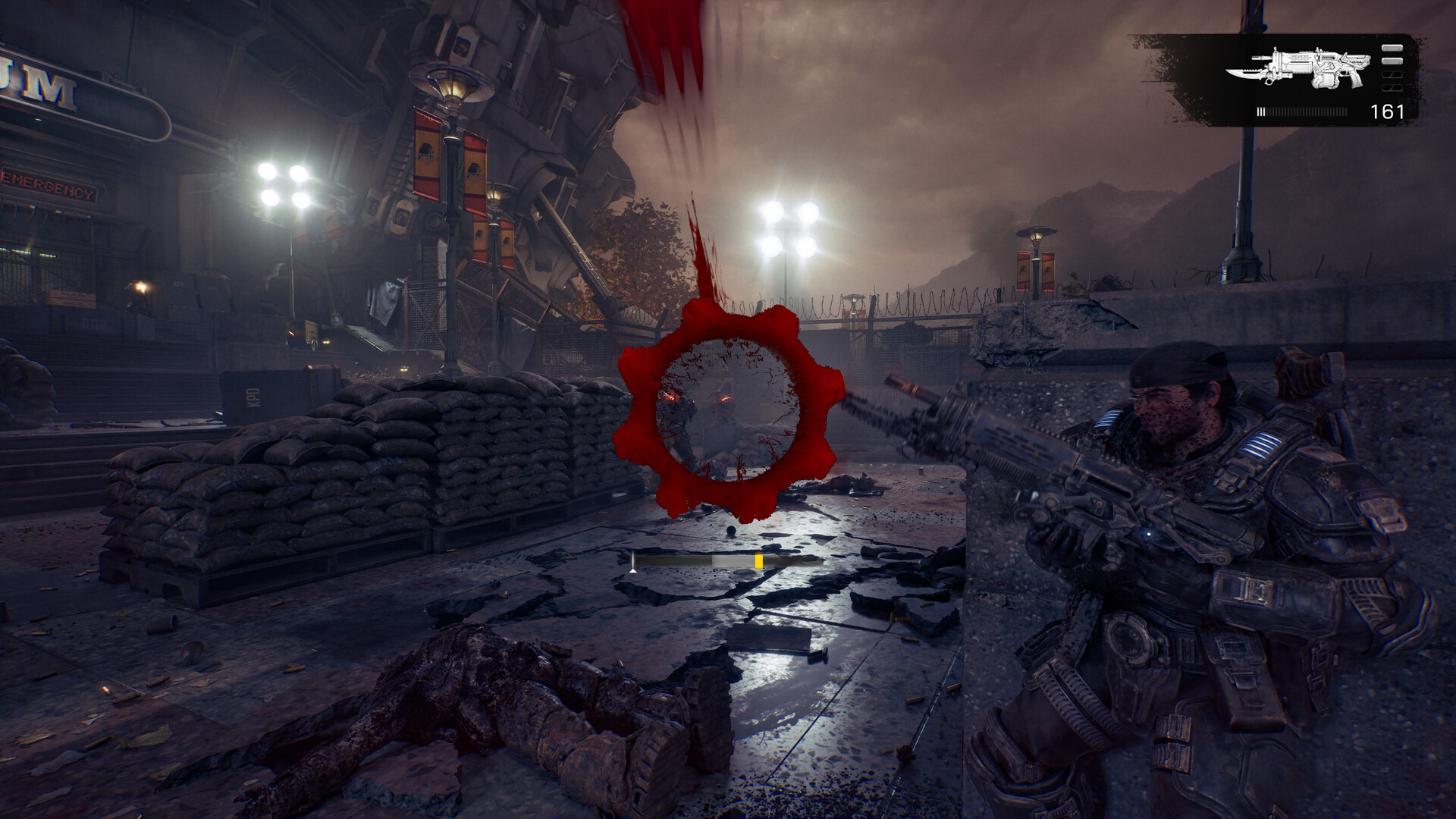
Because weapon handling and movement are shared with the campaign, time spent learning cover mechanics, the active reload system, and the chainsaw Lancer against the Locust will transfer directly into Versus — there's no separate skill tree or loadout system to learn from scratch.
5. Ranked, Social, and the Modes for Learning the Game
Versus offers two main playlists. Ranked includes placement matches, a skill rating that adjusts after each game, and penalties for quitting mid-match — the standard structure for competitive Gears play. Social is the more relaxed option, and it includes the ability to fill empty slots with bots rather than waiting on matchmaking.
For players who want to learn the systems before jumping into either playlist, E-Day also includes Boot Camp and Combat Training. Combat Training in particular supports up to four players in co-op, letting a full squad practice movement, weapon handling, and mode objectives together before taking them into Ranked.
6. Crossplay and Progression
Versus supports full crossplay between Xbox Series X|S and PC, so a friend on Steam or the Microsoft Store can queue into the same lobby as someone on console — the same crossplay support that covers E-Day's campaign co-op. On progression, The Coalition has said Versus will not run through a seasonal battle pass, a departure from how most competitive shooters have handled post-launch content in recent years. Exact details on how cosmetic and weapon unlocks will be distributed instead haven't been fully detailed by the studio yet, so treat that part as still evolving.
7. How Versus Compares to Horde Siege and Campaign Co-Op
If you're deciding where to spend your first few hours in E-Day's multiplayer, it helps to know how the three modes differ. Campaign co-op puts up to four players through the story against AI-controlled Locust, with two-player split-screen available locally. Horde Siege scales that up to 12 players across three squads defending set objectives against waves of enemies — our Horde Siege guide covers its four classes in depth. Versus strips away the AI entirely and puts you against seven other players across four competitive modes. None of the three modes share progression, so your Versus rank won't affect your Horde Siege class levels or vice versa.
If you're still deciding whether to buy the game at all, our release date and editions guide breaks down what each version includes, and our full library of game walkthroughs has guides for E-Day's other systems as they're added.
Quick Tips Recap
- Versus is a 4v4 PvP mode with four launch modes: Team Deathmatch, Conquest, Demolition, and Crucible.
- Six maps are available at launch — Outpost, Battleship, Park, Precinct, Market, and Skyward — all set around Kalona.
- Team Deathmatch uses dynamic respawns instead of fixed spawn points.
- Conquest keeps multiple capture zones active at once rather than rotating a single zone.
- Demolition and Crucible are new modes built around bomb plants and a contested Power Core.
- Ranked and Social are the two core playlists; Boot Camp and four-player Combat Training exist to help you learn the systems first.
- Crossplay works across Xbox Series X|S and PC, and Versus progression won't use a battle pass.