Gears of War: E-Day Combat, Movement and Weapons Explained
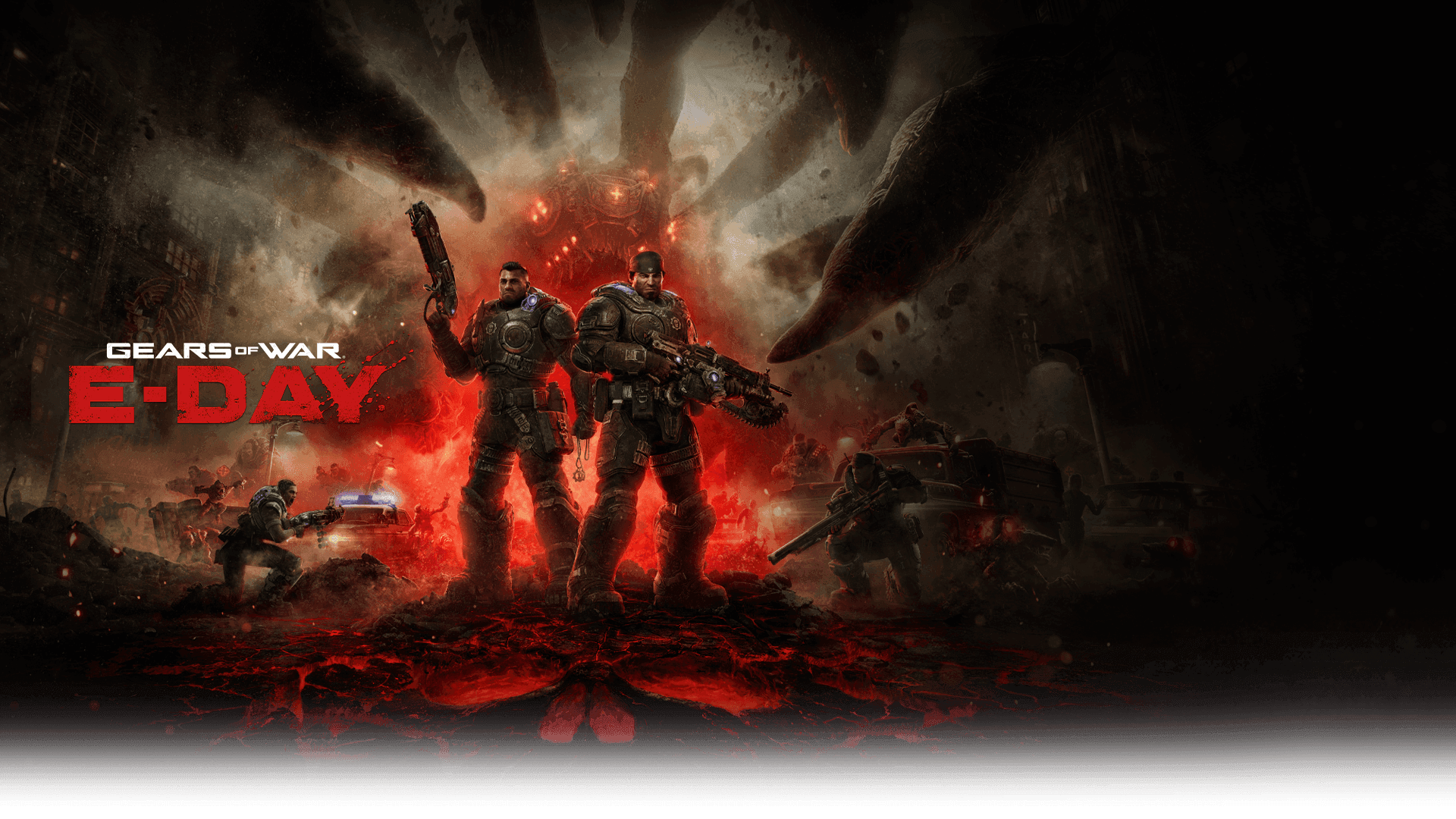
Gears of War: E-Day is out now on Xbox Series X|S and PC. Here's exactly what Xbox has officially confirmed about its reworked cover-and-movement combat, the returning and new weapons, and the redesigned Locust enemies like the Boomer.
Gears of War: E-Day is out now on Xbox Series X|S and PC, and it arrives day one on Xbox Game Pass. Built from the ground up in Unreal Engine 5 by developer The Coalition, this prequel rewinds the series to Emergence Day — the moment the Locust Horde first tore through the surface of Sera — and puts players back in the boots of a young Marcus Fenix and Dom Santiago. The headline change isn't just the new setting: Xbox's own official feature list describes a combat loop that keeps Gears' signature cover shooting but adds "modernized movement and traversal" on top of it, alongside a reworked weapon roster and redesigned enemies. Here's exactly what that means in practice, based on official Xbox and Gears of War marketing materials.
1. What's New in E-Day's Combat Loop
Gears of War has always been built around chest-high cover, blind-firing, and short bursts of movement between safe spots, and E-Day keeps that foundation intact. According to Xbox's official product page, "iconic cover based combat returns, enhanced with modernized movement and traversal that add freedom and verticality." In plain terms, that means the stop-and-pop rhythm longtime fans know is still the backbone of every firefight, but the game no longer boxes players into a single lane of cover-to-cover shuffling. The studio has paired that familiar loop with new options for getting around a battlefield quickly, which changes how encounters can be approached without changing what makes them feel like Gears.
The series has also leaned into a noticeably darker tone for this prequel. Xbox describes E-Day as restoring "a darker, grittier tone" to the franchise, with enemies built to feel more threatening than in recent entries. That tonal shift is backed up by the official key art and screenshots, which lean heavily on burning red light, rubble-choked streets, and oversized Locust silhouettes looming over small, exposed squads of soldiers.
2. Movement and Traversal: Climbing, Cover and Verticality Explained
The biggest mechanical shift Xbox has confirmed is verticality. Past Gears campaigns were largely ground-level affairs punctuated by scripted set pieces; E-Day's official description specifically calls out traversal upgrades that "add freedom and verticality" to how players move through a level. Combined with the destructible, multi-story environments shown in the game's official screenshots — collapsed storefronts, overturned vehicles, multi-level street layouts — the implication is that players will have more vertical options for flanking, repositioning, or escaping a losing fight than the series has traditionally allowed.
Cover itself hasn't been thrown out; it has been built on top of. The official messaging frames this as an evolution rather than a replacement: the stop-and-pop exchanges that define Gears firefights are still there, but traversal between cover points is faster and more flexible. For players coming back to the series after a long break, the practical takeaway is that holding one piece of cover for an entire encounter is no longer the only — or necessarily the best — way to survive.
3. Weapons: Returning Favorites and a New Close-Quarters Arsenal
On weapons, Xbox's official feature list is direct: "fan favorite weapons return and are reimagined, alongside all new weapons built for brutal, close quarters combat." E-Day is a prequel, so the armory reflects an earlier point in the COG's war against the Locust, with familiar silhouettes rebuilt for Unreal Engine 5 rather than copy-pasted from earlier games. Official screenshots back this up visually — soldiers are shown carrying rifles with under-slung attachments built for mid-range engagements, while Locust enemies wield heavier, more improvised-looking armaments suited to the close, cramped street fighting the game's marketing emphasizes.
The "close quarters combat" framing matters because it lines up with the darker, more confined environments shown off so far: gutted electronics stores, narrow alleys, and collapsed city blocks rather than wide-open battlefields. Expect the new weapon additions to be built around short-range trading of damage rather than long-range sniping, which fits a story about a COG unit getting overrun in its own city on the first night of the invasion.
4. Enemy Design: A Darker, More Threatening Locust Horde
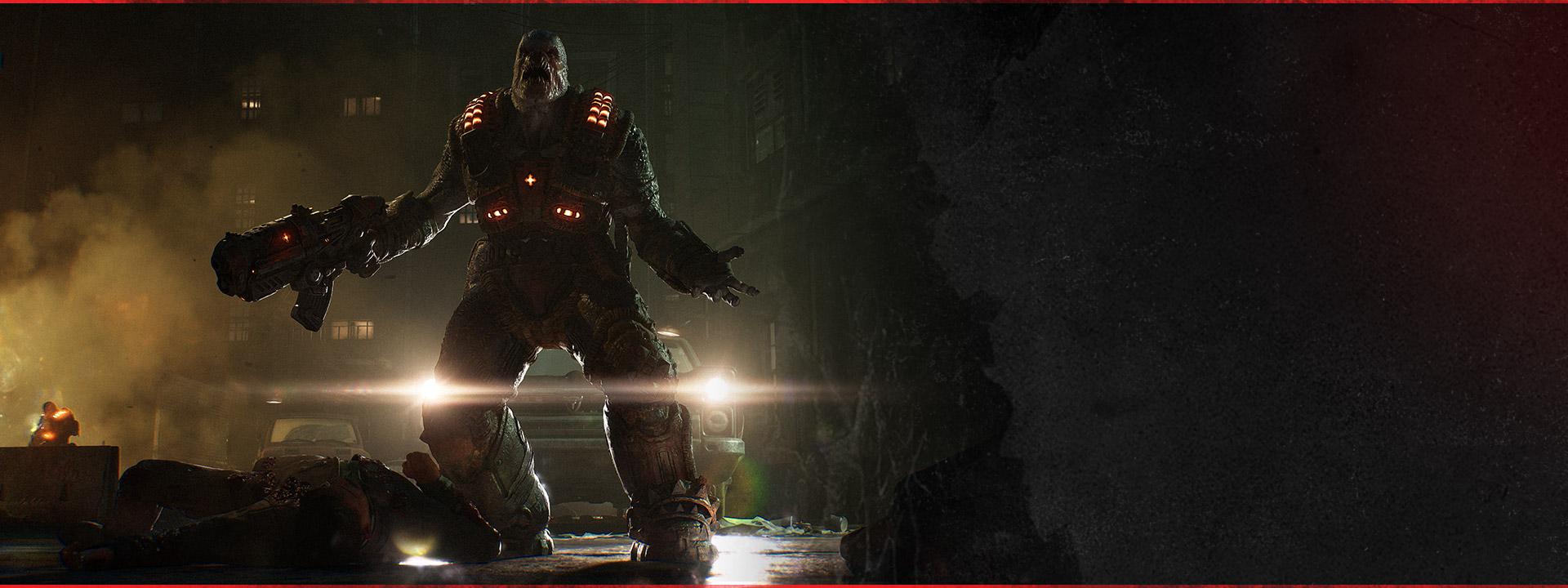
Xbox's official copy promises "familiar enemies are more threatening, joined by all-new creatures and villains," and the asset library backs that up by name: one official screenshot is explicitly labeled a Boomer, the hulking, heavy-weapon-wielding Locust type that has been a series staple since the original Gears of War. In the official image, the Boomer is shown standing over a fallen body in a rubble-strewn alley, gripping an oversized cannon-style weapon and lit by the headlights of a wrecked car — a much grimier, more intimidating presentation than the character's earlier appearances.
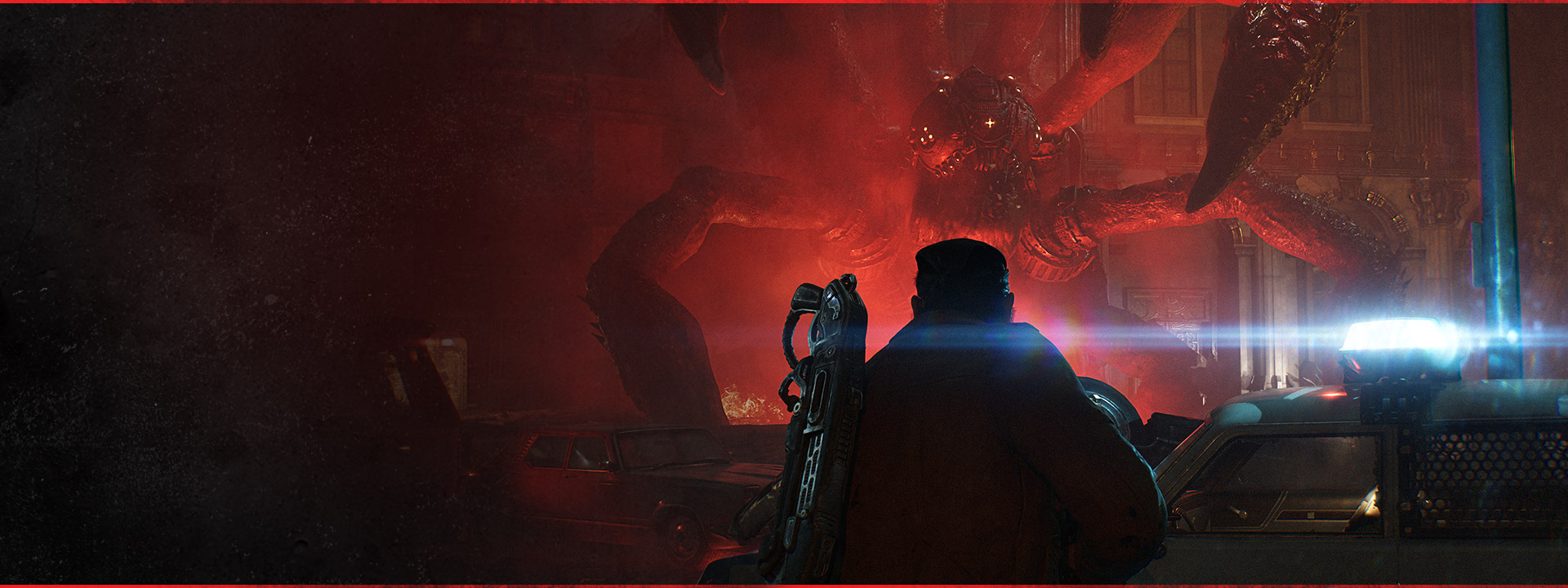
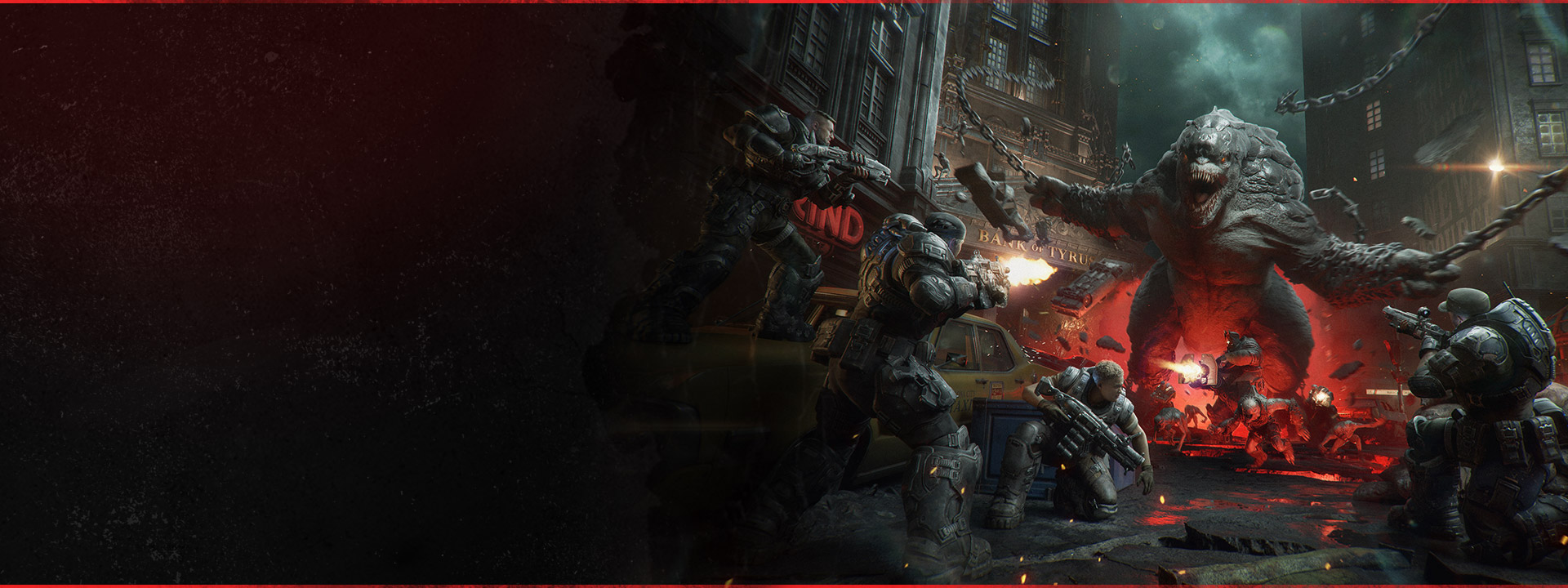
Beyond that confirmed return, the official key art teases far larger threats. One piece of marketing art shows a multi-legged, armored horror with glowing red joints looming over an entire street, dwarfing the COG squad standing beneath it, while another shows soldiers taking cover behind an overturned taxi as a massive, chained creature smashes through a bank facade in the background. The Coalition hasn't published a full bestiary yet, so exact names and behaviors for these larger enemies aren't confirmed — but the scale on display suggests encounter design built around genuine "oh no" moments rather than just larger health bars.
5. Where You'll Use These Systems: Campaign, Horde Siege and Versus
These combat and movement changes aren't locked to a single mode. Xbox confirms the campaign can be played solo, in two-player split-screen co-op on console, or with up to four players online, so the new traversal and weapon options apply whether you're playing alone or coordinating flanks with a full squad. The official multiplayer screenshots show several COG soldiers spread across a street — some kneeling behind a taxi, others pushing forward — which matches the "freedom and verticality" language used to describe the traversal overhaul.
The same systems carry into E-Day's two confirmed multiplayer modes: Horde Siege, described by Xbox as an "evolved take on Gears' iconic co-op wave survival mode," and Versus, a "refined, competitive Versus PvP" mode built around "refined fan-favorite 4v4" formats. Both modes put the new movement options and reworked weapons under pressure in very different ways — wave survival against AI versus direct 4v4 engagements — but neither changes the underlying rules covered above. For a full breakdown of Horde Siege classes and strategy specifically, see our Horde Siege classes and strategy guide.
6. The Tech Behind the Action: Unreal Engine 5 and Performance
None of this would hold together without the engine swap. E-Day is the first mainline Gears campaign built in Unreal Engine 5, and Xbox's official specs promise "4K resolution and up to 60FPS across Campaign and Multiplayer" — meaning the performance target applies evenly whether you're playing the story solo or dropping into Versus. That consistency matters for a game leaning this heavily on fast repositioning and verticality: inconsistent frame pacing is far more noticeable when players are expected to climb, slide, and flank rather than sit still behind one piece of cover.
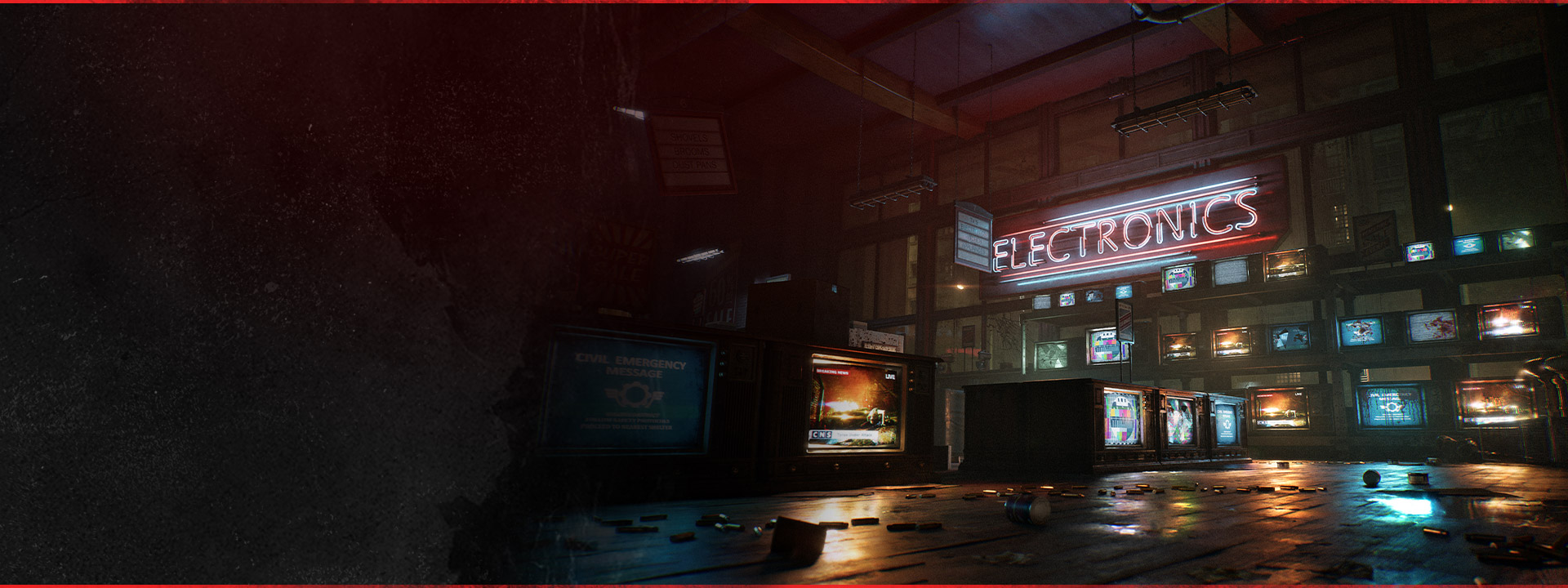
The move to Unreal Engine 5 also shows up in the environments themselves. Official screenshots highlight dense, debris-filled interiors — a wrecked electronics store lined with static-filled CRT televisions is one standout official shot — that lean on the kind of lighting and clutter density modern engines handle well. It's a good visual shorthand for the scale of destruction Emergence Day is supposed to represent.
7. Tips for Jumping In on Day One
Because E-Day changes the traversal rules fans grew up with, a few systems-level habits are worth adjusting from the start rather than relearning mid-campaign:
- Don't treat cover as permanent. With traversal explicitly built to add "freedom and verticality," staying glued to one piece of cover for an entire fight is likely to leave you out of position compared to enemies and teammates moving around you.
- Respect confirmed heavy enemies like the Boomer at range before they close the distance — official art shows them carrying oversized weapons clearly meant for area damage, consistent with past Gears entries.
- Use split-screen or online co-op if you have the option. The campaign officially supports two-player split-screen on console and up to four players online, and squad-based positioning matters more in a game built around verticality than in a purely linear shooter.
- Expect close-range weapon trades rather than long sightlines, based on the tight, debris-choked environments shown in official screenshots — hold distance-favoring weapons for the moments you actually get open sightlines.
- Check performance settings on PC and Series S before diving into Versus, since consistent frame pacing matters more once movement options open up.
For everything else about how E-Day's story unfolds — including who makes up Marcus and Dom's squad — our Gears of War: E-Day story and characters breakdown covers the confirmed setup in full, and our guide to E-Day's editions, pre-install and modes has everything on pricing and what's included in each version. Early critical reaction is rounding up separately in our roundup of E-Day review scores. For more launch-week coverage across other titles, visit our full game walkthrough archive.
Quick Recap
- Cover-based combat returns but is now paired with faster, more vertical traversal, per Xbox's official feature list.
- Weapons are a mix of reimagined series favorites and new additions built specifically for close-quarters fights.
- Boomers are officially confirmed to return, redesigned to look more threatening, alongside unnamed new large-scale enemies teased in key art.
- These systems apply across solo campaign, split-screen and four-player online co-op, Horde Siege, and 4v4 Versus.
- Unreal Engine 5 powers a 4K, up to 60FPS target across both Campaign and Multiplayer.