Silent Hill: Townfall Review Scores, First-Person Horror and PS5 Features Explained

Silent Hill: Townfall launches September 24 with a Metacritic score of 81 and an 89% critic recommendation on OpenCritic. Here's what reviewers are praising and criticizing, how the series' first-ever first-person perspective and new CRTV scanner change the horror, and what's confirmed about the story before launch.
Konami's next entry in the Silent Hill series launches worldwide on September 24, 2026, and the first wave of reviews landed a few days early. Silent Hill: Townfall is the franchise's first full-length game told entirely in first-person, and now that critics have had time with the finished build, a clearer picture is emerging of what the perspective switch actually does to the series' trademark dread — and where it stumbles. Here's what the reviews say, how the new first-person tools work, and what's confirmed about the story before you boot it up.
1. Release Details: Platforms, Early Access and Editions
Silent Hill: Townfall releases on PlayStation 5 and Windows PC (Steam and Epic Games Store) on September 24, 2026. It's developed by Screen Burn Interactive — the Scottish studio formerly known as No Code, rebranded in 2025 — and published by Konami Digital Entertainment alongside Annapurna Interactive. Buyers of the Digital Deluxe Edition got a 48-hour early-access window starting September 22, which is why review coverage and early player impressions have already been circulating for a couple of days ahead of the wide launch.
If you want the full breakdown of editions, pre-order bonuses and the confirmed voice cast, we covered that separately in our earlier rundown of Townfall's release date and cast. This piece focuses on what's new since then: the review scores and the mechanical details critics have now confirmed first-hand.
2. What Critics Are Saying: The Review Scores
Townfall cleared its review embargo on September 21, three days ahead of launch, and the aggregate scores have settled in solidly positive territory: 81 on Metacritic for both the PS5 and PC versions, with OpenCritic reporting an 89% critic recommendation rate. That's a strong showing for a series reboot attempting something as risky as switching Silent Hill's entire camera perspective.
The reviews that have come in are unusually consistent about what works and what doesn't. On the positive side, critics repeatedly single out the game's atmosphere, sound design and sustained psychological dread — the sense that something in St. Amelia's fog is always just out of sight. On the negative side, the same reviews tend to flag the same handful of complaints: stealth encounters against relentless enemies that don't give much room for error, and checkpoints that reviewers describe as ungenerous, meaning a bad stealth sequence can mean replaying a long stretch of level. Several outlets frame Townfall as the strongest attempt yet to stand alongside Silent Hill 2 and Silent Hill 3 without quite matching them — high praise with a clear asterisk.
Konami producer Motoi Okamoto has publicly expressed confidence in how the game would land with critics, and on balance the numbers back that up, even if the checkpoint and stealth-difficulty criticism shows up often enough that it's worth going in with the right expectations.
3. A Silent Hill Game You've Never Played Before: Going First-Person
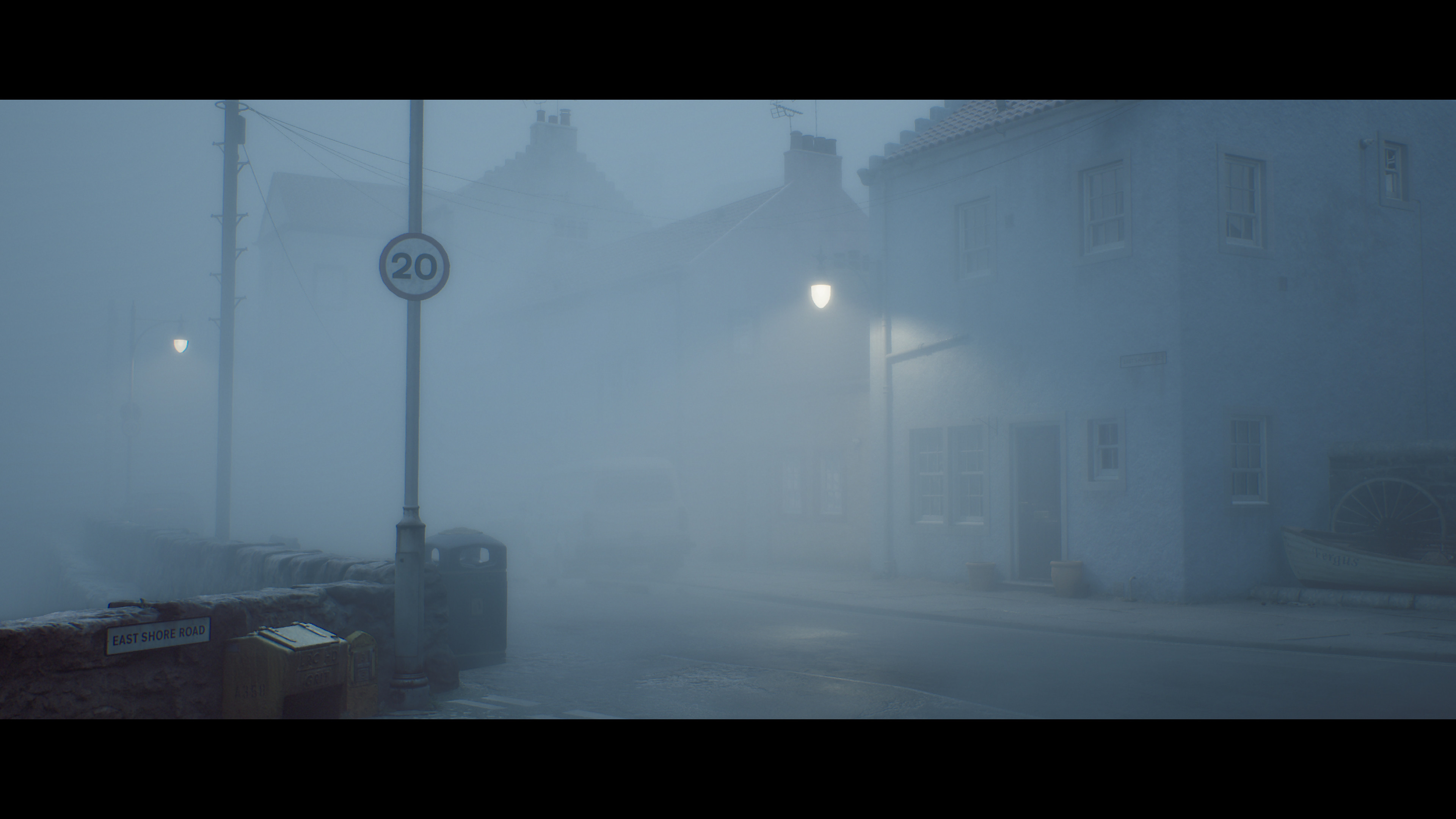
This is the headline change, and it's a first for a mainline Silent Hill title. Townfall drops the fixed or over-the-shoulder cameras the series has used since 1999 in favor of a full first-person view, presented in a 2.35:1 cinematic aspect ratio. PlayStation's own breakdown of the change describes it as creating "a cinematic presentation — but one that also makes your vision feel realistically restricted." In practice, that means players can no longer see a threat approaching from behind or the side the way they could in a third-person Silent Hill game; what protagonist Simon Ordell can see is all you can see.
That restriction shows up throughout the design. Opening a door, reading a note, or checking an item all momentarily occupy Simon's hands and attention — and by extension, yours — which critics note is used deliberately to create vulnerability at exactly the wrong moments. It's a different kind of tension than the series has used before: less about what's revealed by a fixed camera angle, more about what first-person naturally hides from you until it's too close.
4. The CRTV: Townfall's New Survival Tool
Replacing the flashlight-and-radio combo of older Silent Hill games is the CRTV, a handheld analog scanner Simon carries throughout the game. Players tune it across VHF and UHF channels to search for signals, and when it locks onto something nearby, it reports the general location of enemies through a mix of on-screen static and DualSense haptic feedback. It's as much a diegetic prop as a gameplay tool — the fine-tuning animation and searching static are rendered directly on the device's screen in first-person, rather than as a HUD overlay.
Motion controls come into play here too: on PS5, players can physically tilt the DualSense to fine-tune the CRTV's frequency, the same input used for aiming firearms later in the game. It's a small touch, but reviewers note it reinforces the first-person conceit — you're not selecting a menu option, you're physically handling the device the way Simon is.

5. Combat, Stealth and the Otherworld
Combat is intentionally unglamorous. Simon's main weapons early on are salvaged melee items — planks, pipes, whatever's lying around — and reviewers describe encounters as close, clumsy and frightening rather than empowering, with monsters closing the distance fast and a "flimsy object" often the only thing standing between Simon and serious damage. Stealth is built around ducking behind environmental cover, hiding in cabinets and lockers, and watching threats pass by through gaps or on the CRTV screen rather than confronting them directly — which lines up with the review-roundup complaint about how unforgiving those stealth sections can get when they go wrong.
As in past Silent Hill games, the town periodically shifts into a corroded, hostile Otherworld state, and the game is built around five different endings, two of which are only accessible through New Game Plus.

6. Built for PS5: Haptics, 3D Audio and Ray-Traced Lighting
PlayStation's technical breakdown of the game highlights a handful of PS5-specific features that go beyond the usual resolution and frame-rate bullet points. The game runs custom 3D audio designed to make the town's sound design — footsteps, distant groans, the CRTV's static — feel spatially accurate as you move through it. Lighting is ray-traced, with flashlight beams and the transition between the normal town and the Otherworld cited as places where it's most noticeable. DualSense haptics extend to weapon swings, trigger pulls (each weapon reportedly has its own adaptive trigger resistance) and even enemy footsteps transmitted through the controller.
Director Jon McKellan summed up the goal plainly in Konami's own PS5 features piece: "All of the lengths we go to are designed to have you forget you are playing a game, and instead immerse you in the moment."

7. The Story So Far: St. Amelia's Buried Secrets
Townfall is set in 1996 in St. Amelia, a fictional Scottish coastal town whose design draws on the real village of St Monans in Fife. The story follows Simon Ordell (voiced by Jovan Adepo), who repeatedly wakes up in the water near the town docks with no memory of how he got there. As he pieces together what's happening, he uncovers the town's connection to a past oil rig disaster and the interlocking guilt of three residents tied to it.
The confirmed cast also includes Kezia Burrows as Zoe Ellis and Terry O'Quinn — familiar to many for playing John Locke on Lost — as Richard Shaw. Konami and Annapurna have kept most of the specific plot beats under wraps ahead of launch, and given the leak of story details that circulated shortly before release, it's worth going in as blind as you'd like to stay.


8. Quick Tips Before You Start
- Set expectations on difficulty: the most consistent review complaint is unforgiving stealth encounters paired with sparse checkpoints — save at every opportunity the game gives you.
- Learn the CRTV early: it's your main way of detecting threats before they detect you, and it's worth practicing the tuning motion in a safe room before you need it under pressure.
- Lean into first-person awareness: since you can't see behind you, use sound cues and the CRTV rather than assuming a threat isn't there just because it's off-screen.
- Avoid story spoilers: a script leak circulated before launch — if you want the mystery intact, stay off story-focused threads until you've finished it yourself.
- Deluxe Edition owners already had a 48-hour head start from September 22; everyone else gets full access on September 24.
Silent Hill: Townfall arrives with the goodwill of a strong critical reception and the pressure of reinventing one of horror gaming's most respected names in a completely new perspective. Whether or not the stealth-and-checkpoint friction bothers you personally, the reviews agree on one thing: St. Amelia is exactly as oppressive and unsettling as a Silent Hill town is supposed to be. If you're also tracking Remedy's own supernatural thriller this week, our Control Resonant release guide covers that launch in full. For more launch-week coverage and guides across the industry, browse the full walkthroughs and guides archive.