The Legend of Zelda: Ocarina of Time Remake: Every New Feature and Change From the Original, Explained
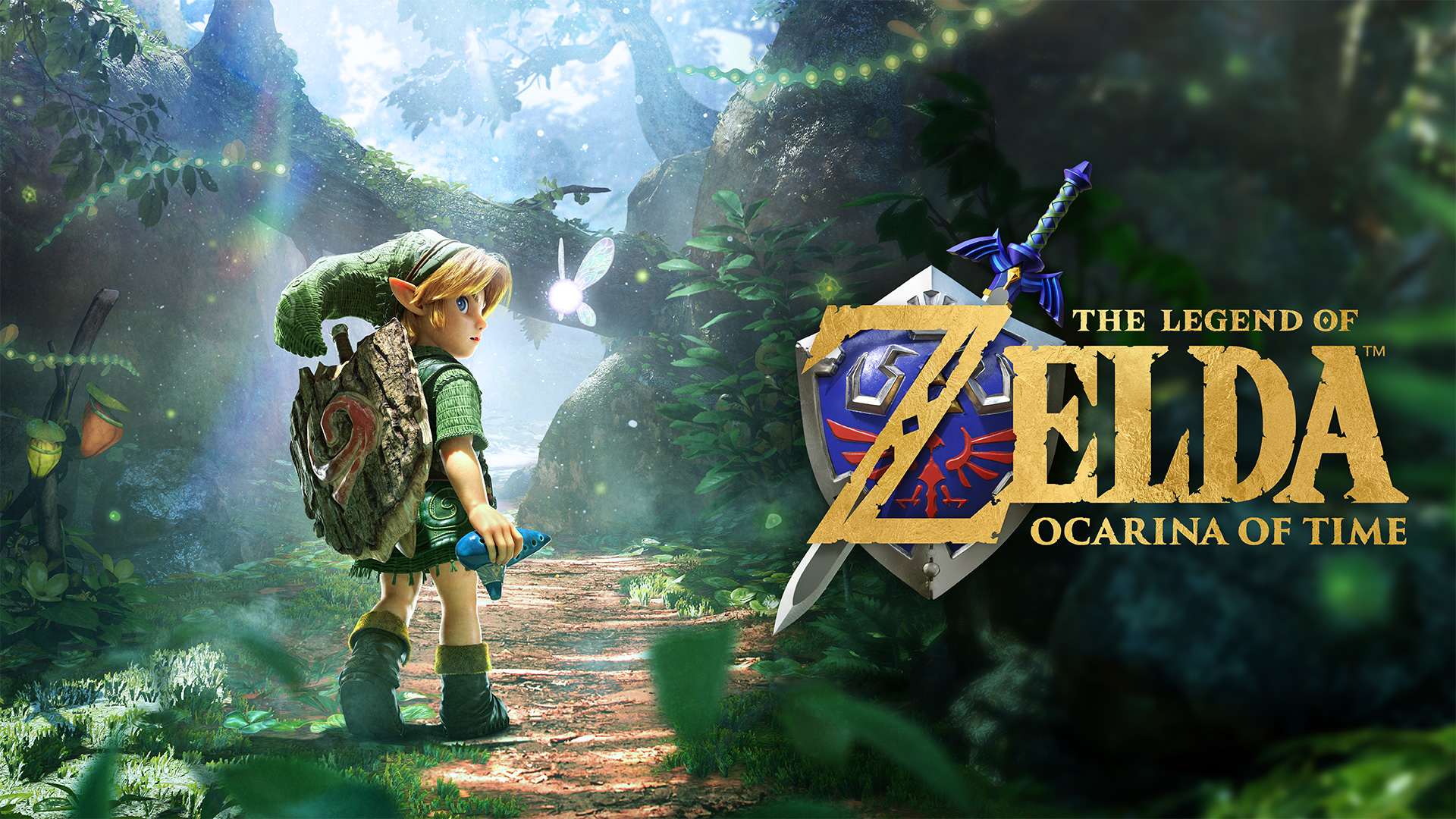
The Legend of Zelda: Ocarina of Time launches on Nintendo Switch 2 November 5, 2026, with far more than a visual upgrade. Here's every confirmed new mechanic: the microphone-based ocarina, the all-new Hall of Fallen Foes boss rematch arena, modern controls, and more.
Nintendo's full remake of The Legend of Zelda: Ocarina of Time launches November 5, 2026, exclusively on Nintendo Switch 2, and it's a far deeper rebuild than a simple visual upscale. Beyond new lighting and character models, Nintendo has reworked how you move, fight, play music and even revisit old boss fights. This guide walks through every confirmed new feature and mechanic in the remake, straight from Nintendo's own product listing and official Direct presentations, so you know exactly what's changed before you load up Hyrule for the first time in nearly three decades.
If you're still deciding whether to buy in, this covers the mechanics side of that decision: what's actually different to play, not just to look at.
1. Release Date, Platform and Price at a Glance
The remake arrives November 5, 2026, as a Nintendo Switch 2 exclusive — it will not run on the original Switch. Nintendo lists it at $59.99 for the digital edition and $69.99 for a physical cartridge release, with a limited foil-cover physical edition also planned. It's the second full remake of the 1998 N64 original, following the 2011 Nintendo 3DS version. For a complete breakdown of editions, pre-order bonuses and regional pricing, see our full release date and pricing rundown. The rest of this guide focuses on what actually changes once you're playing.
2. Overhauled Presentation: Visuals, Voice Acting and Orchestral Score
This isn't a texture-pack remaster. Nintendo's official listing describes "completely overhauled visuals, orchestral music, voice acting, and expanded cutscenes." Every character model, environment and lighting pass has been rebuilt, and cutscenes that were silent or text-only in 1998 now play out with full voice acting and extended dialogue. The in-game score has been re-recorded with a live orchestra rather than the N64's synthesized soundtrack, which matters for a game whose music was always central to its puzzles.
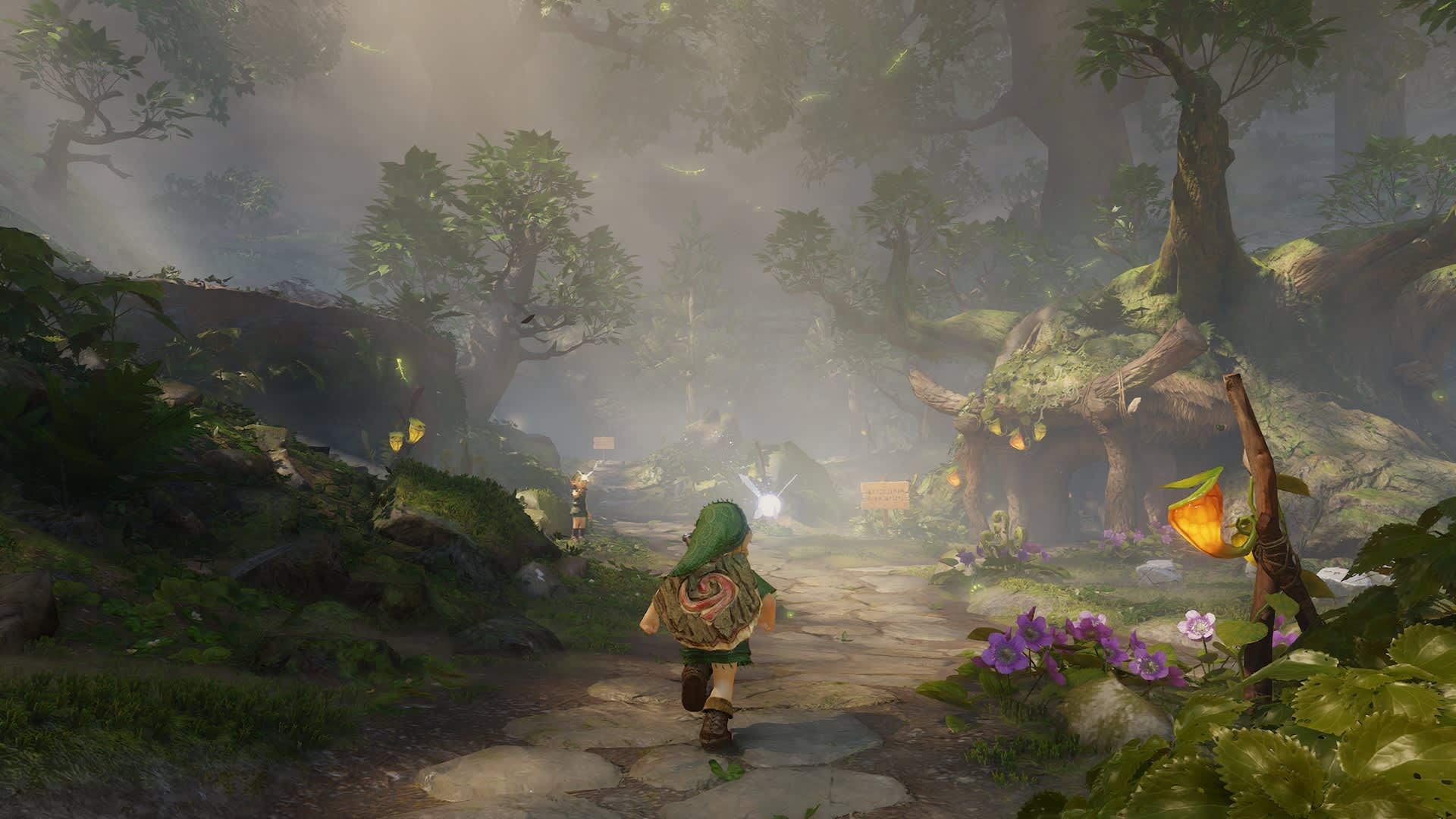
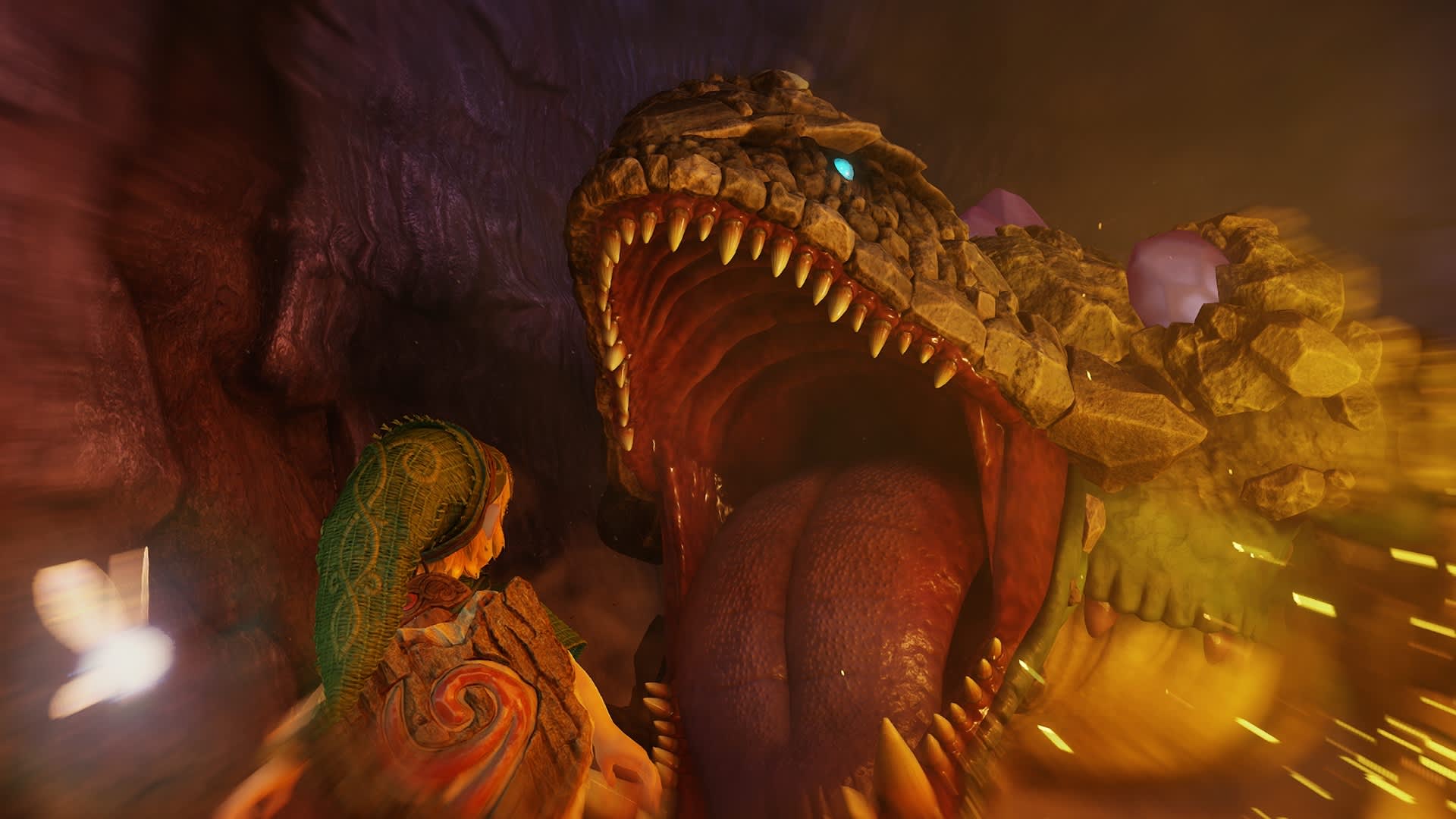
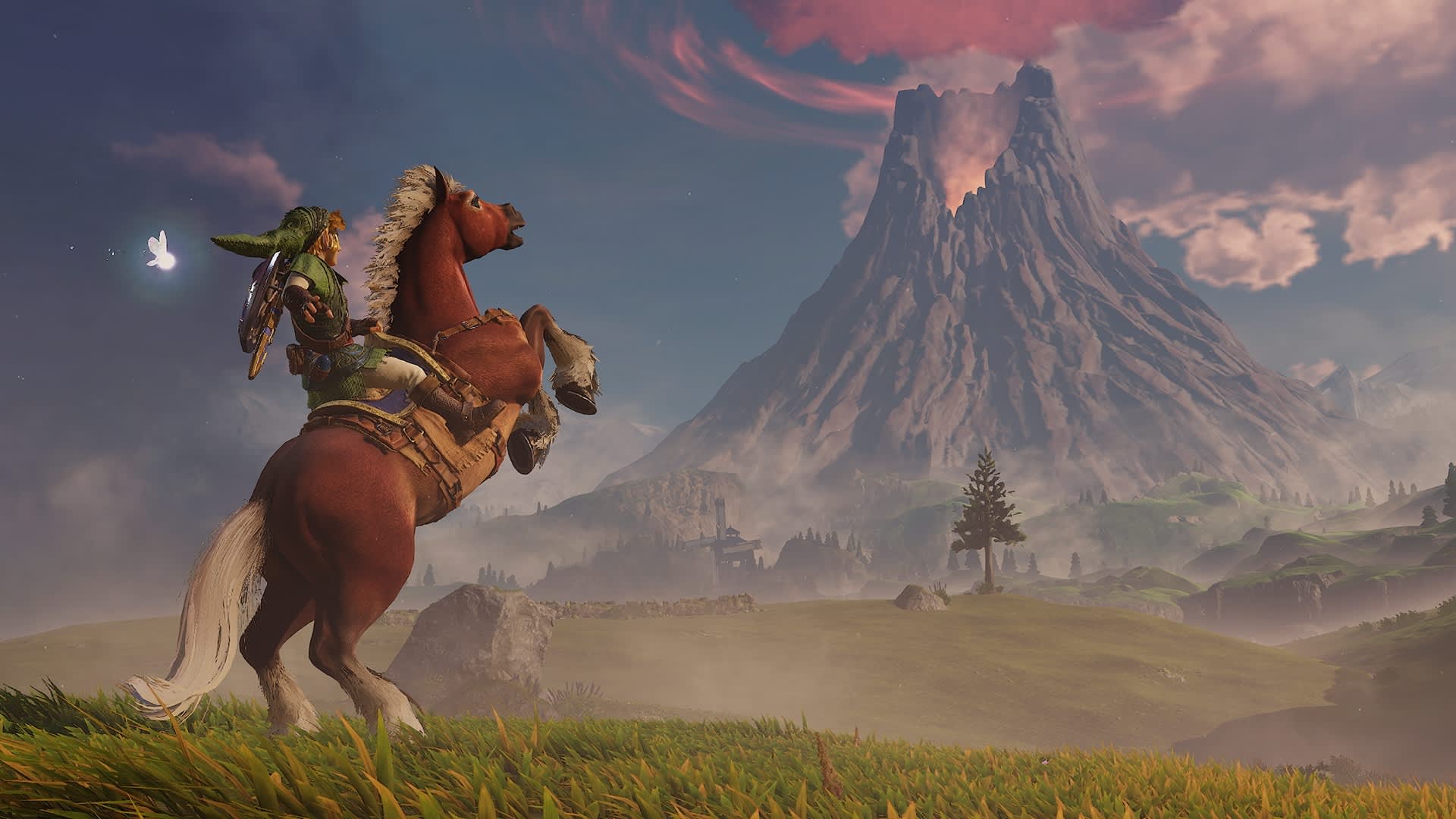
Early official screenshots show Kokiri Forest, Hyrule Field and Death Mountain rebuilt with dense foliage, volumetric fog and dynamic lighting that the N64 and 3DS versions never approached. Nintendo also upgraded the output pipeline alongside the art: the remake supports HDR and variable refresh rate (VRR) on compatible TVs, and outputs linear PCM surround sound.
3. Modern Controls: Camera, Jumping and the New Combat Feel
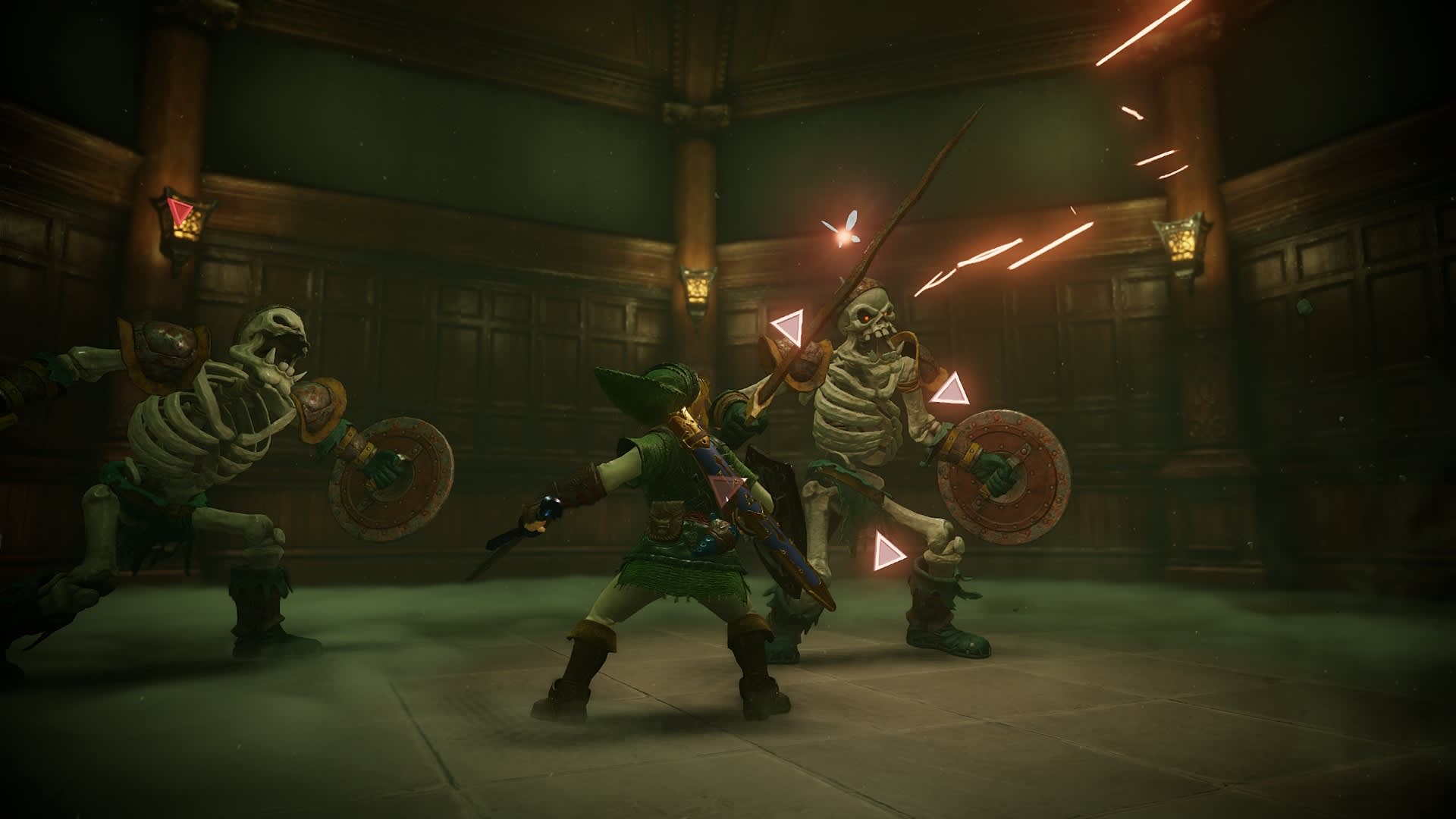
The N64 original's tank-like Z-targeting and fixed camera angles are gone. Nintendo's listing confirms "enhanced controls and modern camera movement, including jumping and dashing" — most notably, Link now has a dedicated jump button, something the series didn't introduce as a standalone action until much later entries. Combat footage shown at Nintendo's Zelda 40th Anniversary Direct demonstrates Link fighting multiple Stalfos skeleton warriors at once with freer camera control and smoother directional movement than the original's grid-locked combat allowed.
Ranged weapons have also been updated: the Fairy Bow and Hookshot can now be aimed with either traditional button controls or motion aiming, toggled in the options menu, giving players a choice between the classic lock-on feel and a more active aiming style.
4. The Ocarina, Reimagined: Hum It, Sing It or Play a Real One
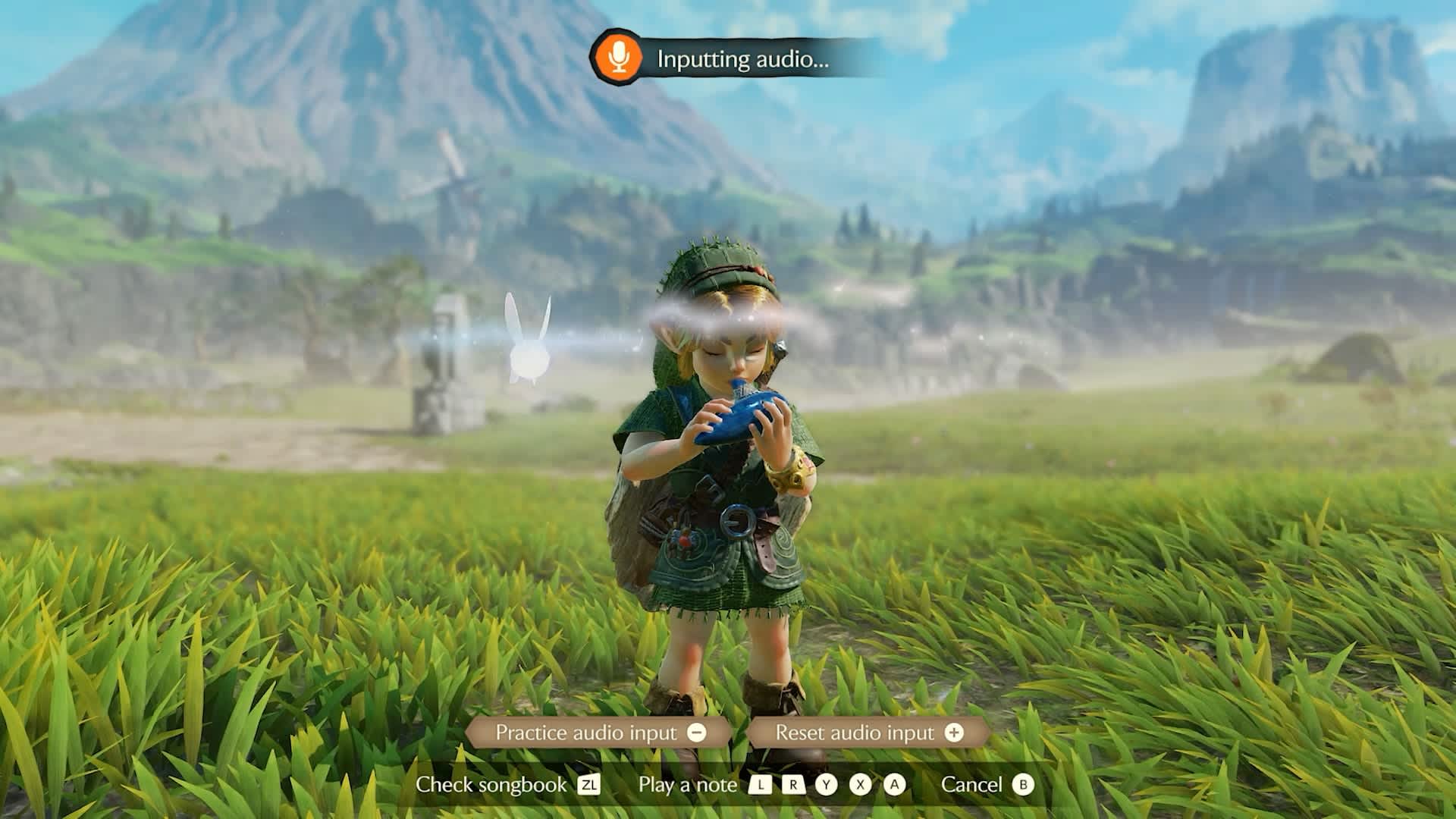
The series' signature instrument is the remake's biggest mechanical swing. Nintendo's product page confirms you can play ocarina songs three ways: with traditional button inputs, by humming or singing into the Nintendo Switch 2's built-in microphone, or by playing an actual physical instrument near the console's mic. In-game, this appears as an "Inputting audio…" prompt while Link raises the ocarina to his mouth, with options to practice audio input or reset it if the system misreads a note.
This turns song-based puzzles — warping between temples, changing the time of day, summoning Epona — into something closer to actually performing the melody rather than memorizing a button sequence, while still letting players who'd rather not sing into their living room fall back on the classic control scheme.
5. Hall of Fallen Foes: A New Arena for Every Boss You've Beaten
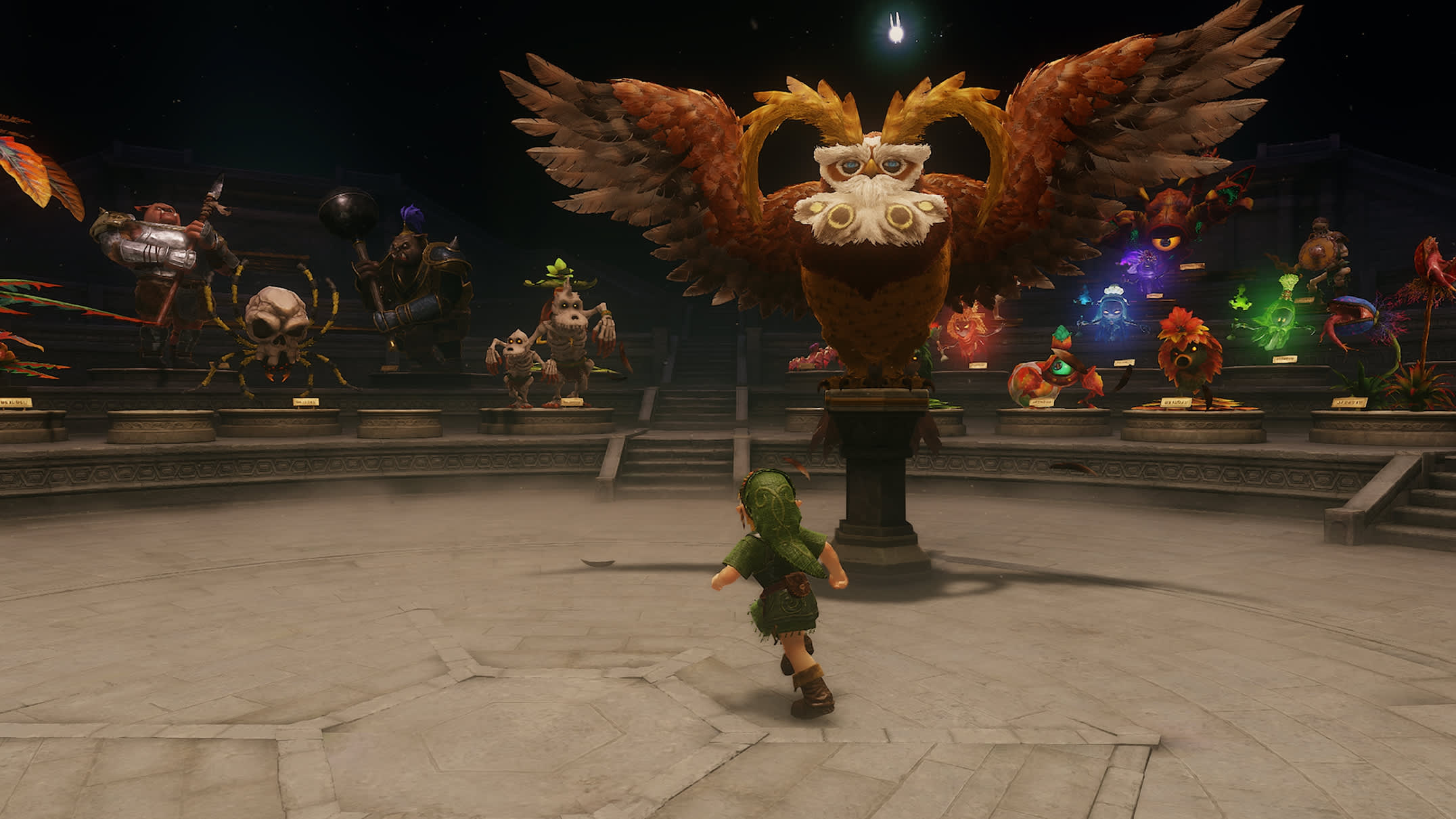
This is the remake's one entirely new piece of content rather than a modernized version of something from 1998. The Hall of Fallen Foes is a new location where statues of every boss you've defeated — from Gohma to King Dodongo to Volvagia — are put on display. Walking up to a statue lets you refight that boss on demand, rather than needing to replay an entire dungeon to see it again. Early footage shown at the Zelda 40th Anniversary Direct depicts the hall as a circular amphitheater lined with illuminated enemy statues, with Link able to trigger a rematch from the pedestal.
For a remake built around letting long-time fans revisit a game they already know, this is the feature aimed squarely at them: a curated boss-rush space that didn't exist in any prior version of Ocarina of Time.
6. Threads of Time, Expanded Dialogue and Zelda Notes
Nintendo's listing describes a new "Threads of Time" tapestry that tracks your progress through the story, alongside expanded dialogue throughout the adventure — a direct consequence of the full voice cast recording lines that the original only implied through text boxes and sound effects. Characters who had a handful of text lines in 1998, including background NPCs across Hyrule's towns, now get fuller scenes.
The remake also connects to Zelda Notes, a companion service built into the Nintendo Switch App. It's designed to keep a running, chronological record of your playthrough, similar to how Zelda Notes already functions for other recent Zelda titles, letting you look back at major story beats and milestones outside of the game itself.
7. amiibo Support, Play Modes and Accessibility Options
Tapping an existing Legend of Zelda amiibo unlocks in-game extras, according to Nintendo's official product listing. Two new amiibo — Young Link and Young Zelda — are planned, though not until 2027, and will unlock retro-style masks referencing the character's classic in-game appearance when they eventually arrive. The remake runs across all three of the Switch 2's play modes: TV, tabletop and handheld.
On the accessibility side, Nintendo confirms the game is fully playable without relying on motion or touch controls, supports stereo and surround sound output, and includes color alternatives for players with color vision differences. It also supports Nintendo Switch Online's Save Data Cloud backup and Nintendo Account family group game-sharing, and ships with 16 supported languages, including English and Japanese.
Watch: The Official Overview Trailer
Nintendo's own channels published an overview trailer covering the remake's new visuals, the ocarina input system and the Hall of Fallen Foes ahead of launch. Here's the official trailer straight from Nintendo:
8. Quick Tips Before You Start
- Decide on your ocarina input early. If you'd rather not sing into the Switch 2 mic in a shared room, you can stick with traditional button inputs for every song — it's a toggle, not a replacement.
- Save a boss for the Hall of Fallen Foes. Once you clear a dungeon, you can revisit that boss any time from the hall instead of replaying the whole dungeon to see the fight again.
- Check your aiming preference in Options. The Fairy Bow and Hookshot support both motion and button aiming — try both before committing to a playstyle.
- Link Zelda Notes through the Nintendo Switch App if you want an automatic record of your playthrough's story beats.
- Existing Zelda amiibo work day one for in-game extras; the new Young Link and Young Zelda amiibo won't arrive until 2027.
9. Official Resources
- Nintendo's official product page for The Legend of Zelda: Ocarina of Time (Switch 2)
- Nintendo Switch 2 official site
- The Legend of Zelda: Ocarina of Time on Wikipedia
For more on what else is launching alongside it, see how Minecraft's Switch 2 editions and pricing compare, or check out how Fortnite runs on the same hardware. You can also browse our full walkthrough archive for more guides across every major release.