Gorogoa Explained: How the Panel-Sliding Puzzles and Hidden Story Work
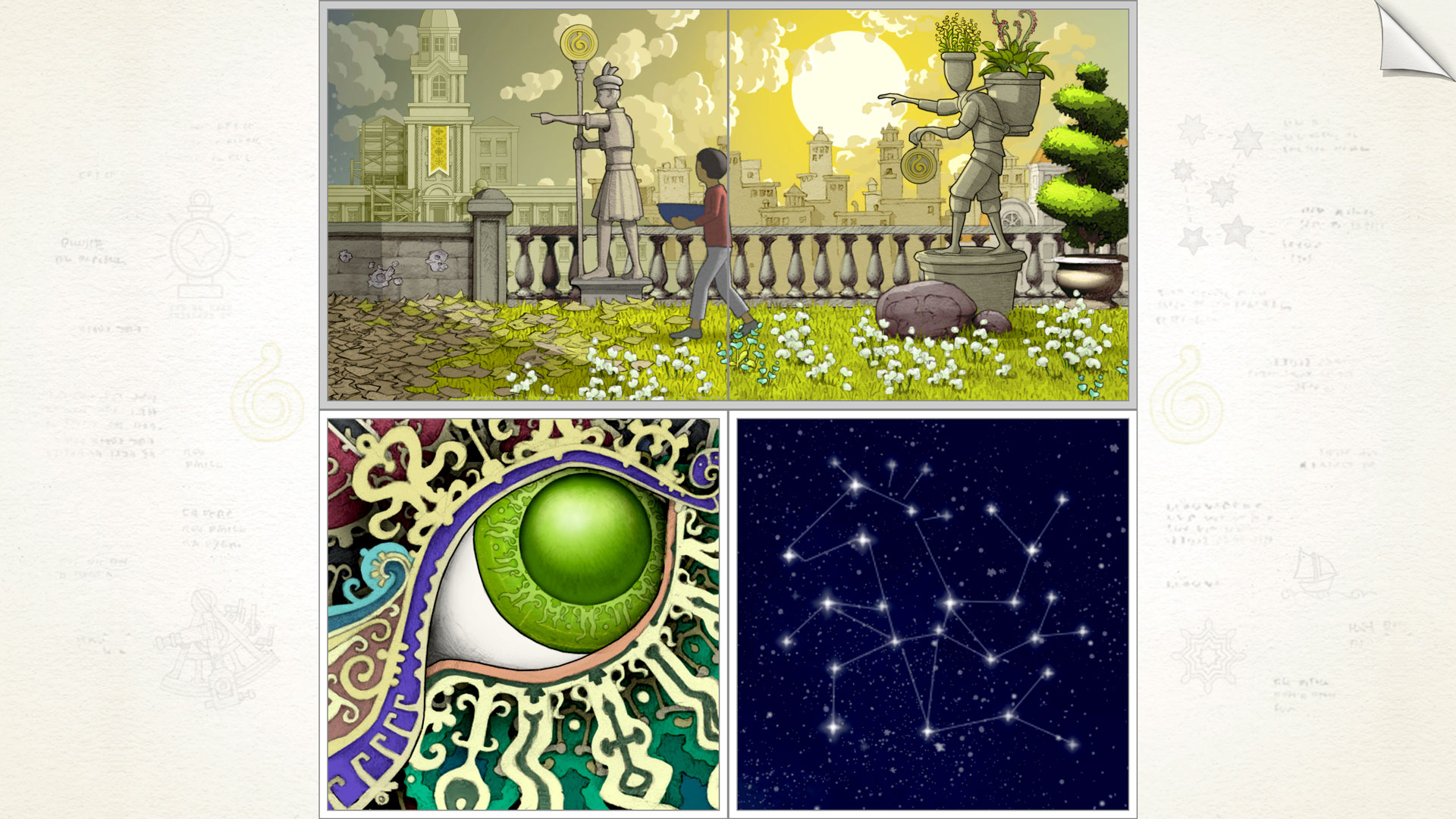
Gorogoa's four-panel grid of hand-drawn illustrations can be slid, zoomed, panned and layered together to tell a wordless story. Here's how Jason Roberts' BAFTA-winning puzzle game actually works, and where to play it today.
Most puzzle games hand you a level and a goal. Gorogoa hands you four small windows and asks you to figure out how they connect to each other — and it never tells you the rules out loud. Six years after illustrator and designer Jason Roberts began drawing it by hand, the game remains one of the most distinctive puzzle experiences ever released on a phone, and its 2x2 grid of moving panels is still copied and referenced by puzzle designers today. Here's how the mechanic actually works, what the game is about, and where to play it now.
1. What Is Gorogoa?
Gorogoa is a hand-illustrated puzzle game designed, illustrated and programmed by Jason Roberts, developed under the studio name Buried Signal and published by Annapurna Interactive. Roberts began working on it in 2011 after leaving his full-time job, originally aiming for a 2013 release; the project ran years over schedule, and Roberts has said he scrapped and completely redrew large finished sections of the game more than once before it was done. It finally launched on December 14, 2017, simultaneously on PC, iOS and Nintendo Switch, with an Android version and PS4 release following.
The wait paid off critically. Gorogoa won the Visual Design Award at IndieCade in 2012 while still in development, was a finalist for the Independent Games Festival's visual art award, and after release won Debut Game at the 2018 BAFTA Games Awards plus Best Mobile Game and the Innovation Award at the 2018 GDC Choice Awards.
2. The Core Mechanic: A Living 2x2 Grid
Every puzzle in Gorogoa takes place inside the same simple frame: a grid with room for up to four panels, each one a small hand-drawn illustration. Unlike a normal sliding-tile puzzle, these panels aren't fixed pictures — they're more like windows into a moving scene. You can:
- Slide a panel into an empty grid cell, repositioning it relative to the others.
- Zoom in or out on a panel, revealing a smaller scene nested inside it or pulling back to see more of the picture.
- Pan within a panel to scroll its contents left, right, up or down, since a single illustration is often far larger than the frame showing it.
Early puzzles train you on these three actions by themselves, and the game never adds a tutorial pop-up to explain a new trick — the only guidance is a small animated marker that appears where something can be clicked or dragged. Reviewers consistently note that the rules seem to expand as you play, because what looks like an ordinary sliding puzzle in the opening minutes turns into something far stranger a few scenes later.
3. Layering: How Separate Panels Combine
The mechanic that makes Gorogoa stand apart from a conventional sliding puzzle is layering. Panels aren't sealed boxes — pieces of one illustration can often be lifted out and placed over a different panel entirely, merging the two scenes. A doorway drawn in one panel might only become walkable once you've dragged a matching piece of architecture from a neighboring panel on top of it. A panel showing the left half of a room and a separate panel showing its right half can be pushed together to form one continuous space.
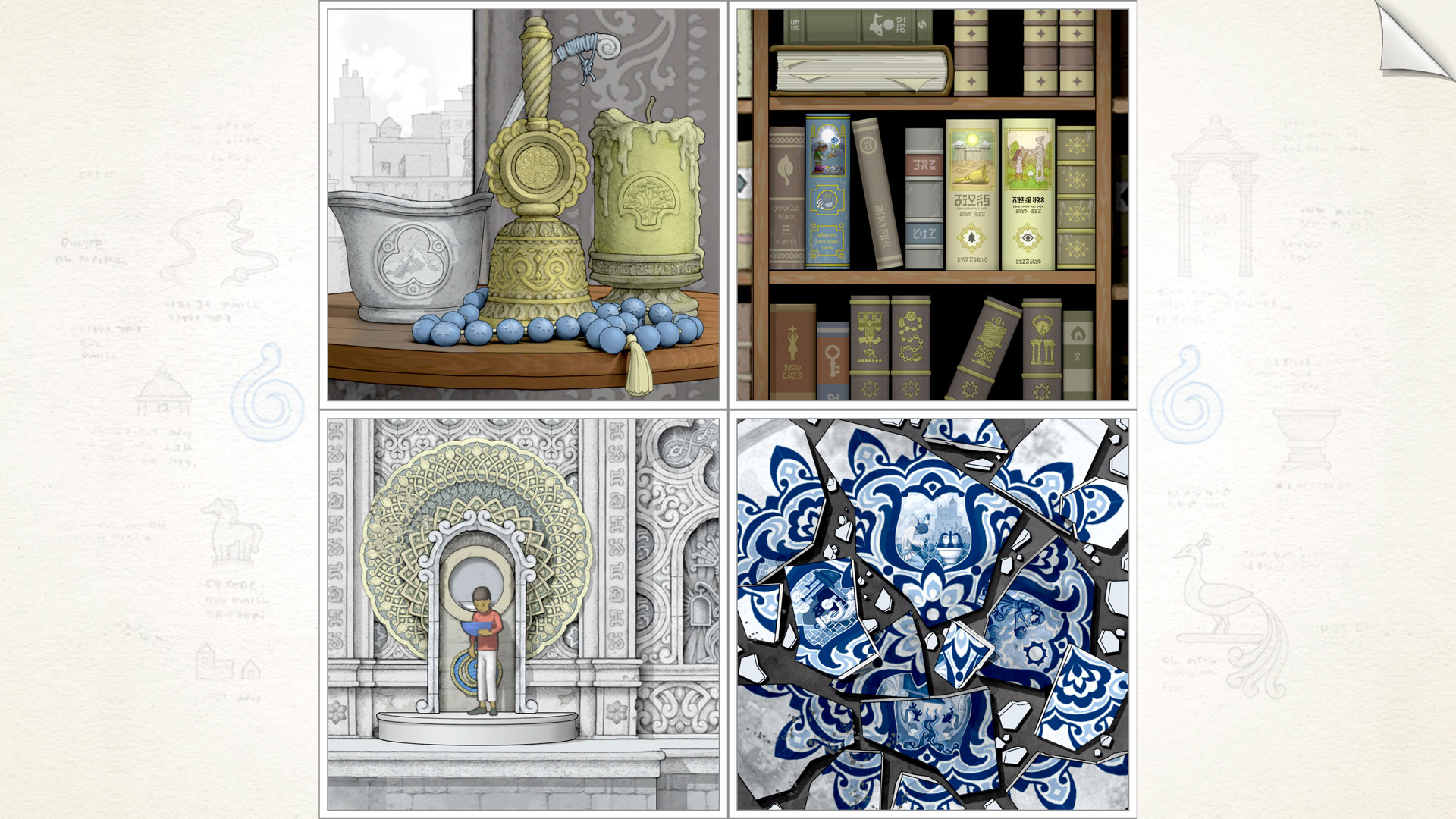
Panels can also nest inside each other. Zooming into a small illustrated object inside one panel — a book, a window, a piece of stained glass — can open up an entirely new scene to explore inside it; solving what's inside and zooming back out often changes the outer panel too. Time matters as well: some panels show the same location in a different era, and sliding or lining those up correctly is how several of the game's puzzles progress.

4. The Story, Told Without a Single Word
Gorogoa has no dialogue and no written text to read — every story beat is communicated entirely through its pictures. The premise is simple: a boy sees a huge, mysterious creature fly past his window and sets out to see it again. He learns that it can be summoned with an offering bowl filled with five different colored fruits, and the game follows his quest to gather them, moving between ordinary streets, religious shrines and a besieged, war-torn version of the same city across different points in time.
Because nothing is spelled out, the plot plays as deliberately abstract — reviewers have described it as a story about religion, devotion and conflict told through symbolism borrowed from real-world belief systems rather than through a conventional narrative arc. You won't find a plot summary screen or chapter titles; the story is something you piece together the same way you solve the puzzles, by noticing how images connect.
5. Where to Play Gorogoa Today
Gorogoa is still sold and supported across most major platforms: Steam for PC and Mac, the Nintendo eShop for Switch, the App Store and Google Play for mobile, and PlayStation Store for PS4. Because the entire game plays out through touch, mouse or a simple directional stick, it controls just as naturally on a phone as it does on a desktop — a big part of why it originally won Best Mobile Game honors. A full playthrough runs short by puzzle-game standards, which is by design: Roberts has spoken about keeping the final game tightly focused after years of cutting material that didn't serve the central idea.

6. Tips for First-Time Players
Because the game deliberately withholds instructions, a few general habits help more than any specific solution:
- Click and drag everything. Doors, windows, bowls and even background details are often interactive; the small pulsing dot is your only hint that something responds to input.
- Don't assume a panel is finished with you. A scene you've already "solved" can often be revisited, zoomed into further, or lined up against a new panel later to unlock the next step.
- Look for matching shapes and colors across panels, not just within one. The game's puzzles are built on visual rhymes — an archway in one picture lining up with an archway in another is rarely a coincidence.
- Zoom out when you're stuck. If a panel feels like a dead end, pulling back often reveals that it's actually a small piece of a much larger image you haven't explored yet.
- Play it in a single sitting if you can. Because the puzzle logic carries across scenes rather than resetting with each one, it's easier to keep track of what you've already tried in one focused session.
If you enjoy the way Gorogoa treats environment art as the puzzle itself, the perspective-bending architecture in Monument Valley 3's optical-illusion stairways and towers scratches a similar itch, while Baba Is You's rule-block logic is a good next stop for players who liked discovering Gorogoa's mechanics without a tutorial. Fans of its point-and-click, single-scene puzzle boxes may also want to look at Fireproof Games' The Room series, which builds similarly intricate hidden mechanisms into physical objects rather than illustrated panels.
7. Official Resources
Quick recap: Gorogoa's four-panel grid can be slid, zoomed and panned, and its real trick is layering pieces of one panel onto another to merge separate scenes and time periods. There's no dialogue — the wordless story of a boy, a bowl of five fruits and a mysterious creature is told entirely through its hand-drawn pictures. It's available now on PC, Switch, PS4, iOS and Android.
Looking for more hand-crafted puzzle and mobile adventure picks? Browse the full walkthroughs and guides archive for dozens more breakdowns like this one.