UEFN Explained: How Unreal Editor for Fortnite, Verse and the Creator Economy Actually Work

Unreal Editor for Fortnite (UEFN) is the Unreal Engine-based tool behind thousands of player-built Fortnite islands, and the system that pays their creators real money. Here's how UEFN, Verse and the Creator Economy actually work — and how Epic says it's all merging into Unreal Engine 6.
Every major Fortnite season gets headlines, but a quieter tool has reshaped the game just as much: Unreal Editor for Fortnite (UEFN). It is the reason islands like escape rooms, horror games, racing tracks and full RPGs now sit alongside Battle Royale in the same app, and it is the reason thousands of creators are paid real money when players spend time in what they built.
Here is what UEFN actually is, how Verse and the Creator Economy work, what changed with the arrival of AI coding tools in 2026, and how Epic says the whole system is about to merge into Unreal Engine 6.
1. What Is Unreal Editor for Fortnite?
UEFN is a free, standalone version of Epic's Unreal Editor that creators install on PC to build and publish playable experiences directly into Fortnite. Epic launched it in public beta on March 22, 2023, describing it as a way to design, develop and publish Fortnite content using "the Unreal Editor's development workflows and proven PC-based toolset," including custom asset import, modeling tools, materials, VFX, Sequencer and Control Rig.
The results are called Islands: playable experiences that, once published and approved, are available to any Fortnite player through the in-game Discover browser. At launch, Epic said more than a million player-built islands had already been published and that over 40% of all player time in Fortnite was spent in creator-built content, out of a player base Epic put at more than 500 million accounts.
2. UEFN vs. Classic Fortnite Creative
UEFN did not replace Fortnite Creative, the sandbox editing mode Epic launched back in 2018 that lets creators level-edit, place devices and publish islands from inside the game itself. The two now run side by side. Fortnite Creative stays the faster, more accessible entry point built around pre-made devices and galleries, while UEFN opens up the deeper Unreal Engine pipeline for teams that want custom-built characters, original code logic and film-quality lighting and effects.
Many published islands blend both: a team blocks out gameplay with Creative devices, then pulls the project into UEFN to add Verse-driven mechanics, imported 3D assets or cinematic camera work. For a broader look at how this fits alongside Battle Royale, Reload and LEGO Fortnite, our rundown of every way to play Fortnite in 2026 covers the full picture.
3. Verse: The Scripting Language Behind the Islands
UEFN shipped alongside Verse, Epic's programming language for Fortnite islands. Verse lets creators write custom game logic rather than relying only on prebuilt devices — things like scoring systems, item-spawning rules, win conditions or dialogue triggers. It is deliberately readable: conditions and branching logic in Verse use plain keywords like if and then, closer to pseudocode than traditional C++.

Verse has also become the foundation for a bigger shift inside Epic. In a June 2026 post on the studio's engine roadmap, Epic's head of engine development, Marcus Wassmer, said the company is "moving the gameplay programming model to Verse" across its entire engine lineup, specifically so persistent, large-scale, live experiences with "thousands of contributors" become possible — language that goes well beyond a single island's logic.
4. Importing Custom Assets and the Unreal Engine Toolset
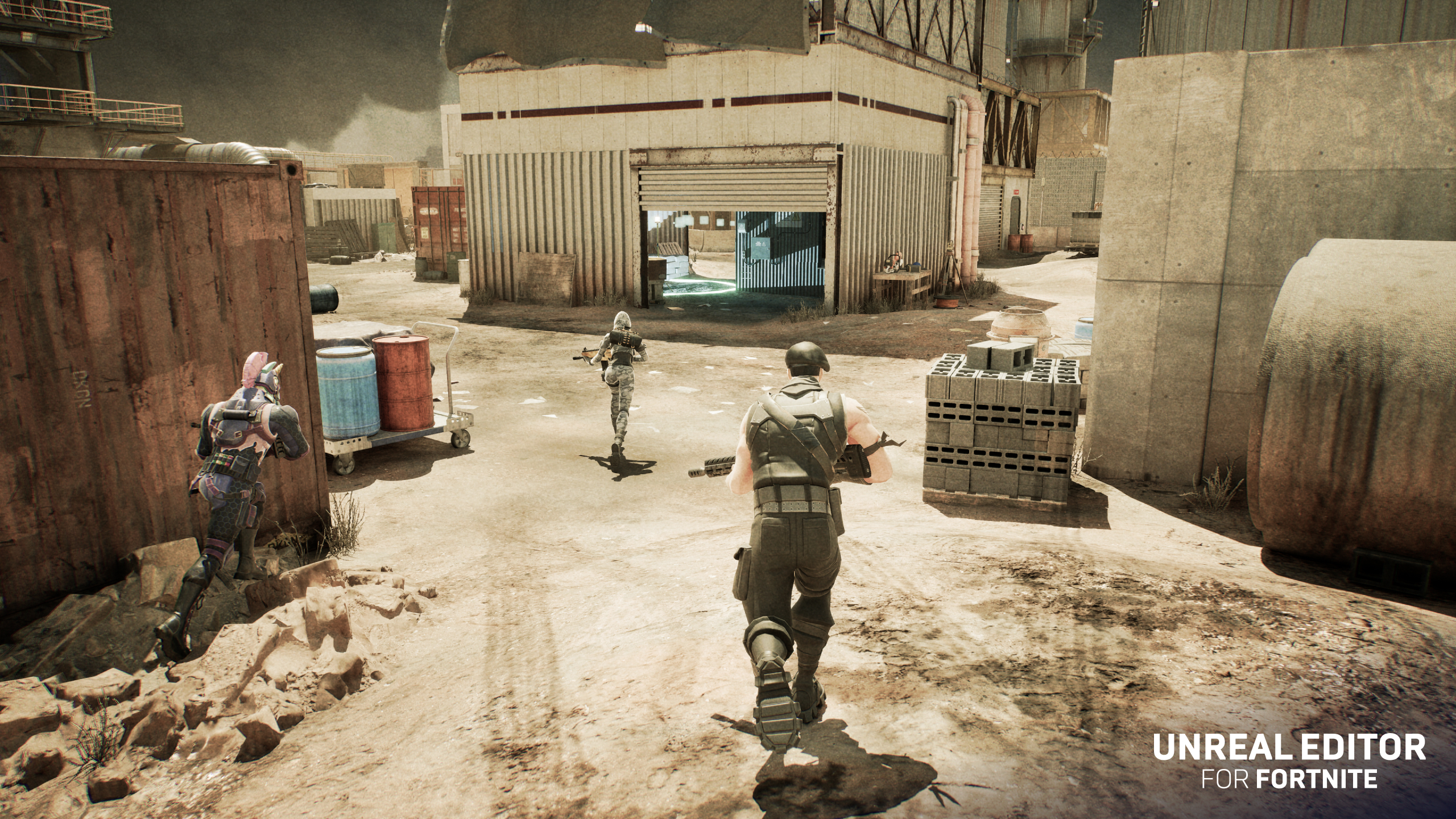
Because UEFN is built on Unreal Engine, creators are not limited to Fortnite's existing art style. Custom static meshes, skeletal meshes, animations, textures and sounds can all be imported and used in a published island, and anything a creator makes, imports or publishes stays theirs — it can be removed at any time. UEFN also carries over heavyweight Unreal Engine tools like Sequencer and Control Rig for cinematics and character animation, Niagara for visual effects, and the Material Editor for custom shaders.

That pipeline is why UEFN islands can look as different as a gritty military shootout and a glossy sci-fi corridor crawl, both built on the same underlying engine and published to the same Discover browser that serves Battle Royale.
5. The Creator Economy: How Island Makers Actually Get Paid
UEFN's launch came bundled with Creator Economy 2.0, Epic's framework for paying the people who build islands. Under its engagement payout system, Epic distributes 40% of net revenue from Fortnite's Item Shop — and from most real-money Fortnite purchases — proportionally to the creators of eligible islands and experiences, based on how much time players spend in them. Notably, that pool isn't limited to independent creators; Epic's own modes, including Battle Royale, are counted as eligible "islands" competing for the same engagement-based share.
To publish and get paid, a creator joins the Island Creator & Engagement Program, registers a Creator Code, and submits their island through UEFN for an Epic review against the Island Creator Rules and age-rating requirements. Once approved, every creator also gets a dedicated public page for their brand and experiences.
Three years in, Epic says that system has paid out in a big way. At Unreal Fest Chicago on June 17, 2026, Epic announced that UEFN and Fortnite Creative payouts to creators had passed $1 billion cumulatively since the 2023 launch — a figure Epic said goes entirely to third-party creators, with none of it counted as Epic's own revenue. Epic also said that community-made content now accounts for 47% of all hours played in Fortnite, up from the 40%-plus figure reported at UEFN's 2023 debut.
6. Unreal MCP: AI Coding Tools Arrive in UEFN
In August 2026, alongside the release of Unreal Engine 5.8, Epic brought Unreal MCP — a Model Context Protocol plugin — into UEFN itself. MCP is an open standard that lets agentic coding assistants connect directly to the editor and work alongside a creator rather than through copy-pasted code. According to Epic's official announcement, Unreal MCP in UEFN can write and compile Verse files, search and explain existing code, place and configure Creative and Verse devices, create and edit Scene Graph entities, build interfaces with UMG, and start, stop or debug play sessions — all confined to the creator's own project.
Epic frames it as lowering the technical barrier to entry: a creator can describe an outcome in plain language, such as triggering a fireworks effect when a player crosses a finish line, and have an agent locate the right device, place it and wire up the trigger.
Official demo of Unreal MCP writing and compiling Verse code inside UEFN. Video: Fortnite Developers (YouTube)
7. What's Next: Unreal Engine 6 and the UEFN Merger
UEFN's biggest change yet is still ahead. In the same June 2026 roadmap post, Epic confirmed that over the next two years it will unify UE5 and UEFN — currently two separate development streams — into a single product: Unreal Engine 6. Wassmer described UE6 as being built around three shifts happening together: moving gameplay programming to Verse, making content and economies portable across games and engines through open standards, and building MCP-based tooling with integrations for multiple AI assistants as productivity multipliers rather than replacements for creative decisions.
For everyday island creators, that means the tool they already use is on a direct path to becoming a first-class part of Epic's flagship engine, rather than a Fortnite-only side branch — though Epic has not yet detailed exactly when UEFN projects migrate or what changes creators will need to make.
8. How to Find and Play UEFN-Built Islands Right Now
You don't need to touch the editor to benefit from any of this. Every UEFN island that passes Epic's review appears in Fortnite's in-game Discover browser alongside Creative and Epic's own modes, and each creator has a public page at Fortnite.com under their registered Creator Code where logged-in players can queue up islands for later. If you're mainly chasing the current season's content rather than community islands, our breakdown of Chapter 7 Season 4 Override's battle pass and map changes covers what Epic itself has shipped this season.
Quick Recap
- UEFN is Epic's free Unreal Engine-based tool for building Fortnite islands; it launched in beta in March 2023 alongside Verse and Creator Economy 2.0.
- It runs alongside, not instead of, classic Fortnite Creative — see our guide to LEGO Fortnite's Odyssey and Brick Life modes for another side of Fortnite's creator-driven ecosystem.
- Engagement payouts share 40% of net Item Shop and real-money purchase revenue across eligible islands, Epic's own included.
- Epic says creators have been paid over $1 billion since 2023, with community content now at 47% of all Fortnite playtime as of mid-2026.
- Unreal MCP (added August 2026) lets AI coding assistants write Verse, place devices and test play sessions inside UEFN.
- Epic plans to merge UE5 and UEFN into Unreal Engine 6 over the next two years.
Official Resources
- Epic's original UEFN public beta announcement (Unreal Engine)
- Unreal MCP in UEFN, official announcement (Fortnite News)
- The Road to Unreal Engine 6 (Unreal Engine)
- Fortnite Creator Portal — Island Creator Program sign-up
For everything else happening in Fortnite right now, browse the full walkthroughs.net guide archive.