Tetris Explained: Scoring, Modern Versions and Beginner Tips
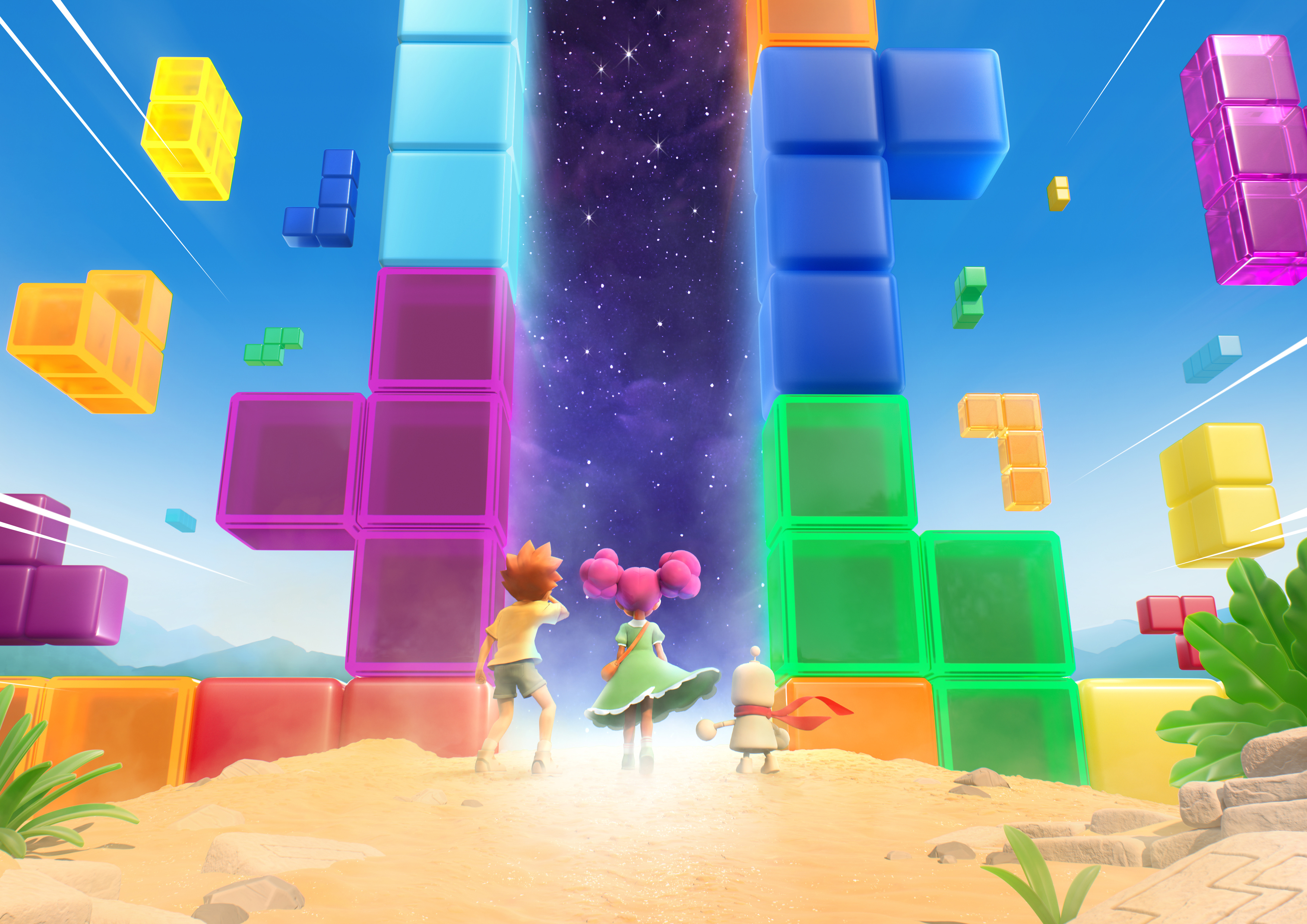
Tetris isn't just one game anymore: The Tetris Company now licenses the brand across Tetris Effect: Connected's audiovisual Journey mode, Tetris 99's free Switch battle royale, and casual mobile entries like Tetris Block Party. Here's how scoring and T-spins actually work, what each version offers, and beginner tips that carry across all of them.
Tetris has outgrown the single falling-blocks game most players remember. The Tetris Company now licenses the brand to a whole lineup of official titles, from a slow, meditative audiovisual re-imagining to a free-for-all battle royale on Switch to casual mobile apps built for quick sessions. If you only know one version, it is worth knowing what the others actually offer and how the scoring that drives all of them works.
This guide breaks down the mechanics every official Tetris game shares, explains how scoring and T-spins work without inventing numbers that vary by version, and walks through the current official lineup — Tetris Effect: Connected, Tetris 99, Tetris Block Party and classic competitive Tetris — so you can pick the one that fits how you actually want to play.
1. Tetris Today: One Brand, Many Games
Tetris began in 1984 as Alexey Pajitnov's falling-block puzzle, but the brand today is run by Tetris Holding/The Tetris Company, led by CEO Maya Rogers, which licenses the rules and tetromino designs out to different studios rather than building every game itself. That is why "Tetris" can mean a $20 audiovisual experience on Steam, a free battle royale mode bundled with Nintendo Switch Online, or a casual mobile app published by a mobile-games specialist — they are built by different teams under license, sharing the same core rules and the same official seal of approval.
That licensing model is also why the brand leans so heavily on community events. The Tetris Company regularly promotes World Tetris Day (June 6, marking the game's anniversary) across its licensed titles, and continues to support long-running community tournaments built around classic Tetris rather than treating the game as a single closed product.
2. The Mechanics Every Version Shares
However a specific release dresses it up, the underlying game stays consistent across officially licensed Tetris titles:
- Seven tetrominoes: the I, O, T, S, Z, J and L pieces, each made of four blocks.
- The Next queue: a preview of upcoming pieces so you can plan ahead instead of reacting blind.
- Hold: set a piece aside to use later, swapping it back in when you need it.
- Ghost piece: an outline showing where the current piece will land if dropped straight down.
- Soft drop and hard drop: nudge a piece down faster, or slam it instantly into place.
- Rotation system: modern, Guideline-compliant Tetris games let pieces "kick" away from walls and other blocks when you rotate them near an edge, rather than simply refusing to rotate.
Once those fundamentals are second nature, the differences between versions come down to presentation, pacing and the win condition — clearing a target score, outlasting opponents, or just seeing how long you can survive.
3. How Tetris Scoring Actually Works
Scoring punishes single-line clears and rewards patience. Clearing four lines at once (a "Tetris") is worth far more than four separate single-line clears, which is why experienced players build flat and wait for a long vertical I-piece rather than clearing lines the moment they can.
T-Spins and Back-to-Back
A T-spin — rotating a T-piece into a slot it couldn't otherwise reach, then locking it there — clears lines for a bonus well beyond a normal clear of the same size. Chaining Tetrises or T-spins back-to-back, without a weaker clear breaking the streak, adds a further bonus in Guideline-based scoring. Combos, where you clear lines on consecutive piece drops, stack on top of that.
Exact point values differ between games and modes, so rather than quote numbers that won't hold up across every version, the practical takeaway is the same everywhere: stacking cleanly and clearing multiple lines at once, especially with T-spins, is always worth more than panicking and clearing singles.
4. Tetris Effect: Connected's Audiovisual Journey

Developed by Monstars Inc. and Resonair and published by Enhance, Tetris Effect: Connected is built around Journey mode: a run through a sequence of audiovisual "Areas," each with its own music, color palette and backdrop that reacts to how you play. Clearing lines triggers particle effects synced to the soundtrack, and the Speed Level and Area Score climb as you move deeper into a run.

The game's signature mechanic is Zone: filling a meter lets you freeze time and stack up line clears that all resolve at once when Zone ends, turning a messy board into a huge score swing. The "Connected" half of the name refers to its three-player co-op multiplayer mode, added on top of the original single-player Tetris Effect, where each player's board feeds into a shared Zone meter.

It is available on PC, PlayStation, Xbox and Nintendo Switch, and it is the version worth picking up if you want Tetris as a sit-back, headphones-on experience rather than a competitive one.
5. Tetris 99: Free Battle Royale on Switch
Tetris 99 was the first free game Nintendo offered to Nintendo Switch Online subscribers, and it remains available (and still supported) as part of that subscription. It pits 99 players against each other at once: clearing lines sends "garbage" lines to opponents you target, and the board thins out as players get knocked out until one is left.
Nintendo keeps the game active through recurring Maximus Cup events, limited-time tournaments themed around other Nintendo franchises that award an exclusive in-game theme to players who rack up enough event points, unlocked permanently once earned. It is the easiest entry point if you already have a Switch Online membership and want competitive Tetris against real opponents rather than the clock.
6. Tetris Block Party and the Mobile Lineup

On mobile, Tetris Holding has licensed the brand out to PlayStudios, which publishes Tetris Block Party as a casual, social take on the formula alongside a refreshed version of the classic Tetris mobile app. The refreshed app keeps the familiar Marathon mode (endless play against a rising speed curve) next to a faster Adventure mode with level-based progression, and ties progress into PlayStudios' myVIP loyalty program.
These mobile entries are built for short sessions rather than deep competitive play, and they are the versions most likely to show up in a casual player's app store recommendations rather than a dedicated storefront search.
7. Classic Tetris and the Competitive Scene
Original NES-style Tetris never went away competitively. The Classic Tetris World Championship (CTWC), a community-run tournament now in its seventeenth year, draws top players for live, bracket-style matches, and The Tetris Company has continued to acknowledge and support it through its own news channels even though the event itself is fan-organized. If Tetris Effect's ambient Journey mode is the relaxed end of the brand, CTWC-style classic play — no hold piece, no ghost piece, pure reaction speed against an accelerating stack — is the other extreme.
8. Beginner Tips That Actually Help
- Stack flat. Avoid leaving single-block gaps under an overhang; they are hard to clear and cost you height.
- Keep a well open. Leaving one column empty on the side lets you drop a vertical I-piece for a Tetris instead of settling for a single or double.
- Use Hold deliberately. Save an I-piece or a piece you don't have a good spot for right now rather than holding at random.
- Watch the Next queue, not just the current piece. Planning two or three pieces ahead avoids painting yourself into a corner.
- Don't chase T-spins before you can stack cleanly. A flat, gap-free board is worth more than an attempted trick play that leaves holes.
Whichever version you pick, the fundamentals carry over. Learn to stack flat and read the Next queue in any Tetris game, and that skill transfers whether you're chasing a high Area Score in Tetris Effect: Connected's Journey mode, trying to be the last board standing in Tetris 99, or just clearing an Adventure level on your phone. If you'd rather settle into a different match-3 puzzler for a while, Royal Match's power-up and booster combos and Candy Crush Saga's special candies and live events are both built around the same "plan ahead, then trigger a big combo" instinct Tetris rewards. Players who prefer renovation-style puzzle games instead of pure block-stacking can also check how Homescapes blends match-3 puzzles with its story mode.
Official Resources
- Tetris.com — official news and brand information from The Tetris Company
- Tetris Effect: Connected on Steam
- Tetris 99 on Nintendo's official site
For more puzzle and mobile game breakdowns like this one, browse the full walkthroughs and guides archive.