Final Fantasy Resonance: Visions, Espers and the Stagger Combat System Explained
Final Fantasy Resonance launched October 22 to some of the strongest reviews of any Final Fantasy entry in years. Here's how its timeline-based stagger combat, the Vision job system and Espers-as-allies actually work, plus a few tips before you start.
Final Fantasy Resonance is out now on PlayStation 5, Xbox Series X|S, Nintendo Switch, Nintendo Switch 2 and PC, and it's already shaping up to be one of the best-reviewed entries in the franchise in years. Square Enix built it from the ground up as a new HD-2D turn-based RPG rather than a remake, and its battle systems borrow liberally from across Final Fantasy's history while adding a few genuinely new ideas. Here's how the combat actually works, what Visions and Espers do, and what to know before you start your save file.
1. A Strong Launch for a Brand-New Final Fantasy
Final Fantasy Resonance released on October 22, 2026, developed by Square Enix with Lancarse and published by Square Enix across every major platform, including a day-one Steam release. It followed a free demo that let save data carry over into the full game, which is part of why early impressions were already so positive before launch day arrived.
Critical reception has been strong. Famitsu's four-reviewer panel scored it in the mid-to-high 30s out of 40, and aggregate review sites have clustered scores in the mid-to-high 80s, with several outlets going as high as a perfect score. Player reviews on Steam opened similarly positive. The most common criticism across reviews is the story, which some critics describe as a fairly standard framework for carrying the combat and Vision systems — not the reinvention some expected from a mainline-adjacent new entry.
2. The Battle System: Timeline Turns and the Stagger Mechanic
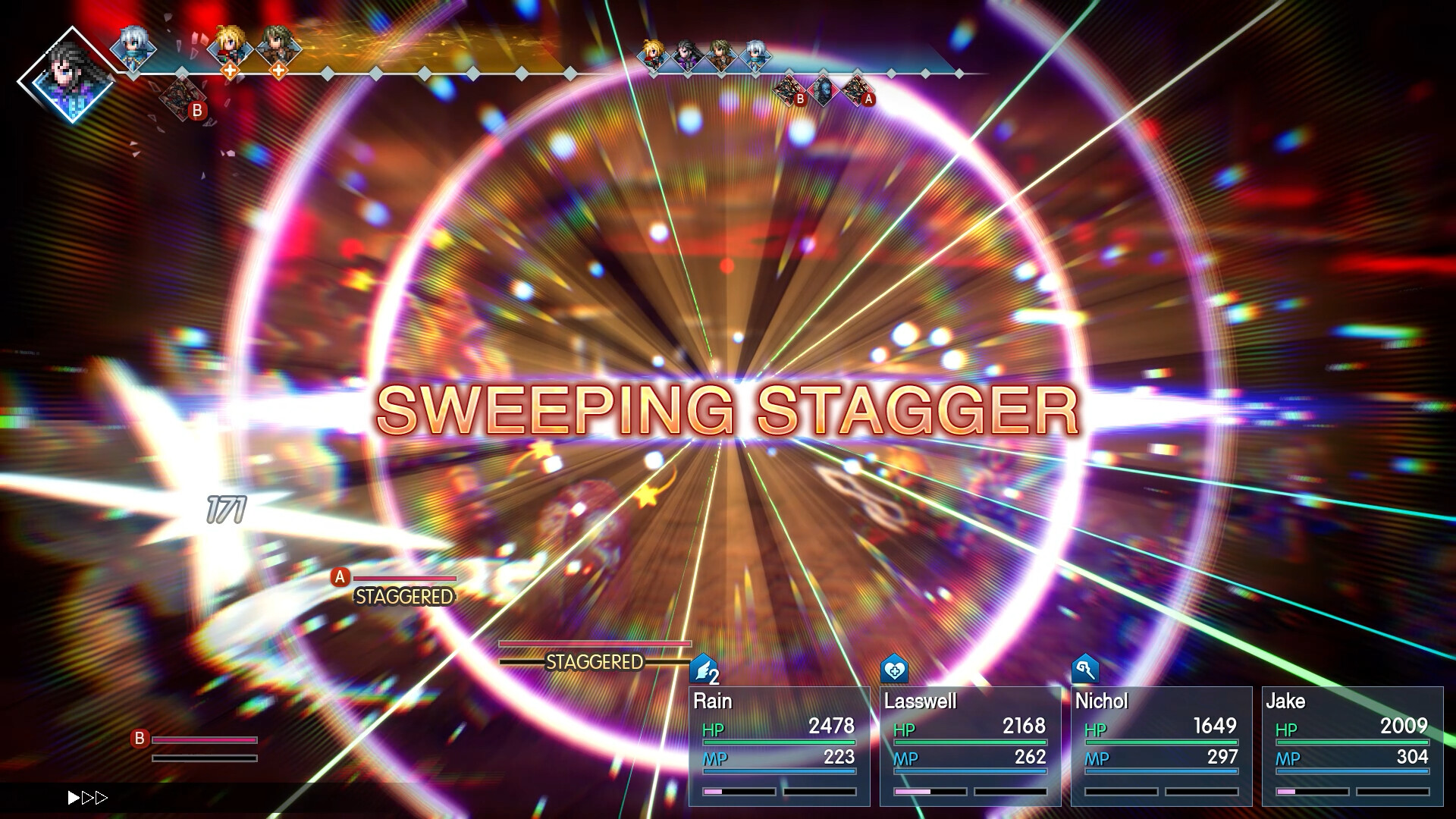
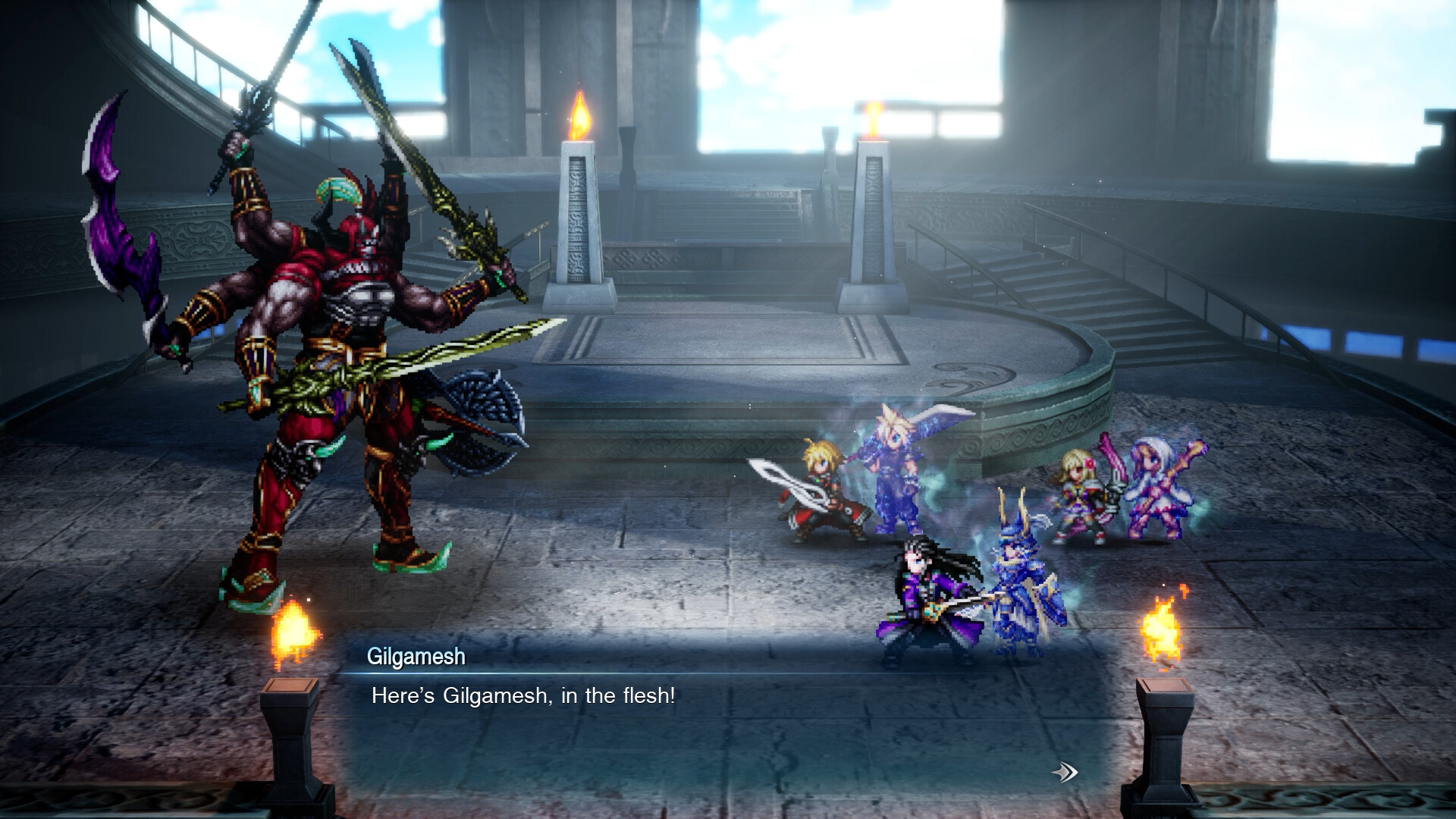
Combat is turn-based and built around a visible timeline at the top of the screen that shows the order upcoming actions will resolve in, for both your party and the enemy side. Rather than a strict "everyone acts once per round" structure, faster actions and certain abilities can shift a unit's position on that timeline, so managing turn order becomes part of the strategy rather than a passive readout.
Layered on top of that is a stagger system similar in spirit to the one popularized by other HD-2D turn-based games. Enemies have a hidden stagger threshold tied to specific weaknesses — elemental, physical or Vision-based. Chip away at that threshold with the right attacks and an enemy becomes Staggered, taking sharply increased damage for a short window. Landing a big attack during that window can trigger a "Sweeping Stagger" break, a flashy full-party follow-up that can swing a tough fight in your favor if you time it well.
3. Visions: The Job System, Reworked
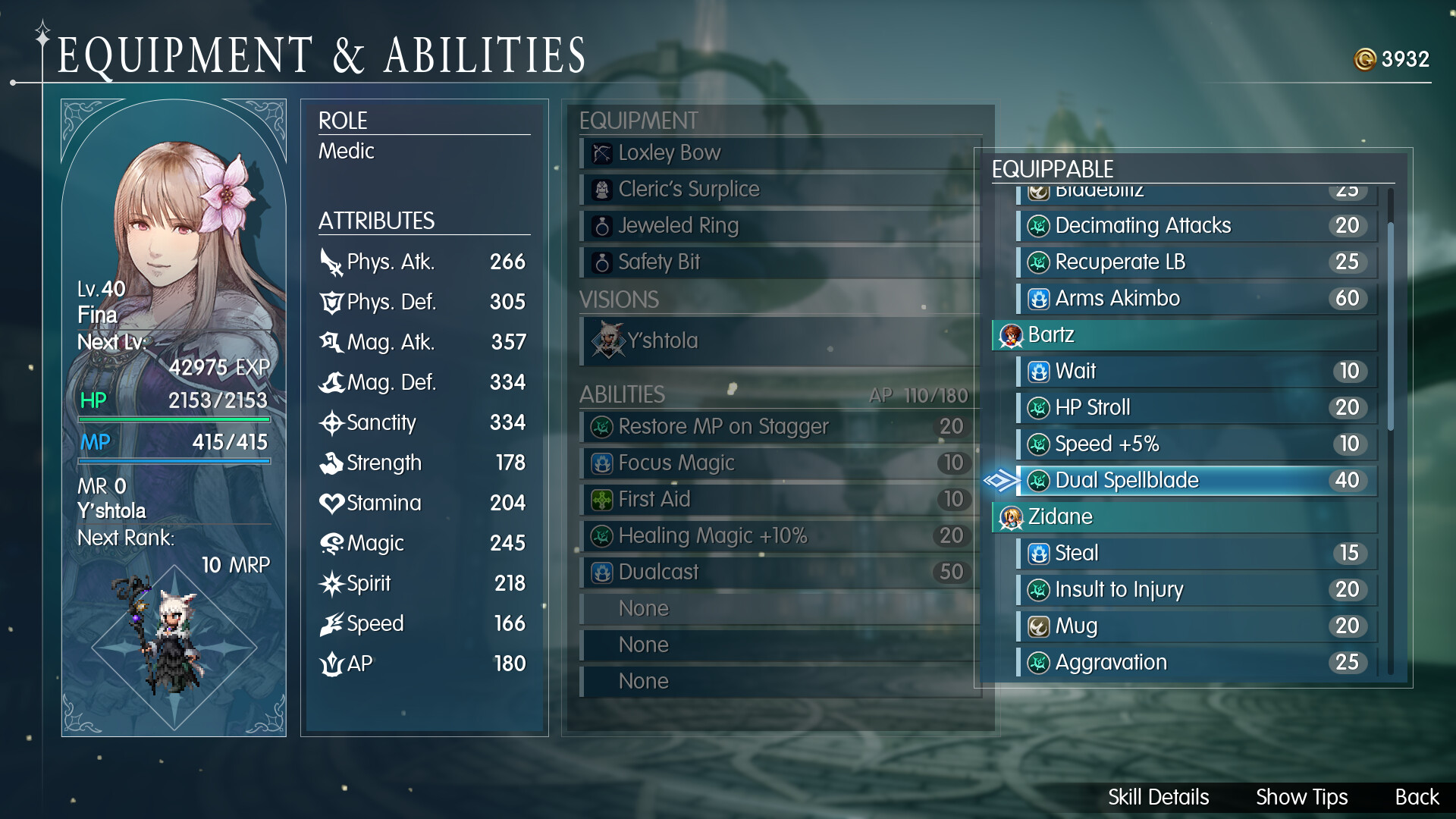
Instead of a traditional job system, party members equip Visions — crystallized essences of characters from across Final Fantasy's history. Equipping a Vision to a party member grants that character a set of attributes, skills, magic, and a unique Resonance attack tied to whoever the Vision represents. Square Enix has described Visions as a direct evolution of the series' classic job system rather than a replacement for it: you still build a party around complementary roles, but the roles are expressed through specific characters rather than generic classes.
Each Vision also levels up independently through use in battle, spending AP to unlock additional abilities on its own skill tree. That means swapping a Vision onto a different party member doesn't reset its progress, which opens room to experiment with party composition without losing earlier investment. Abilities unlocked through one Vision can sometimes be equipped more broadly too, letting you mix and match skills across your whole roster over time.
4. Espers: Summons That Fight Alongside You
Summons return under the classic name Espers, and they behave differently than a one-off ultimate attack. Once called, an Esper appears on the battlefield and acts as a temporary, independently acting ally for a limited number of turns rather than a single scripted animation. They're tied into the Vision system too — Espers appear near whichever party member has the relevant Vision equipped, rather than being a separate menu entirely divorced from your party build.
Because Espers take up turns of their own and have their own attack patterns, deciding when to call one is a real tactical choice: burn it early for sustained pressure across a fight, or hold it to swing a Stagger window. Reviewers have pointed to the three-turn structure of early Espers as a deliberate design choice that keeps them powerful without letting a single summon trivialize an entire encounter.
5. Exploring an HD-2D World
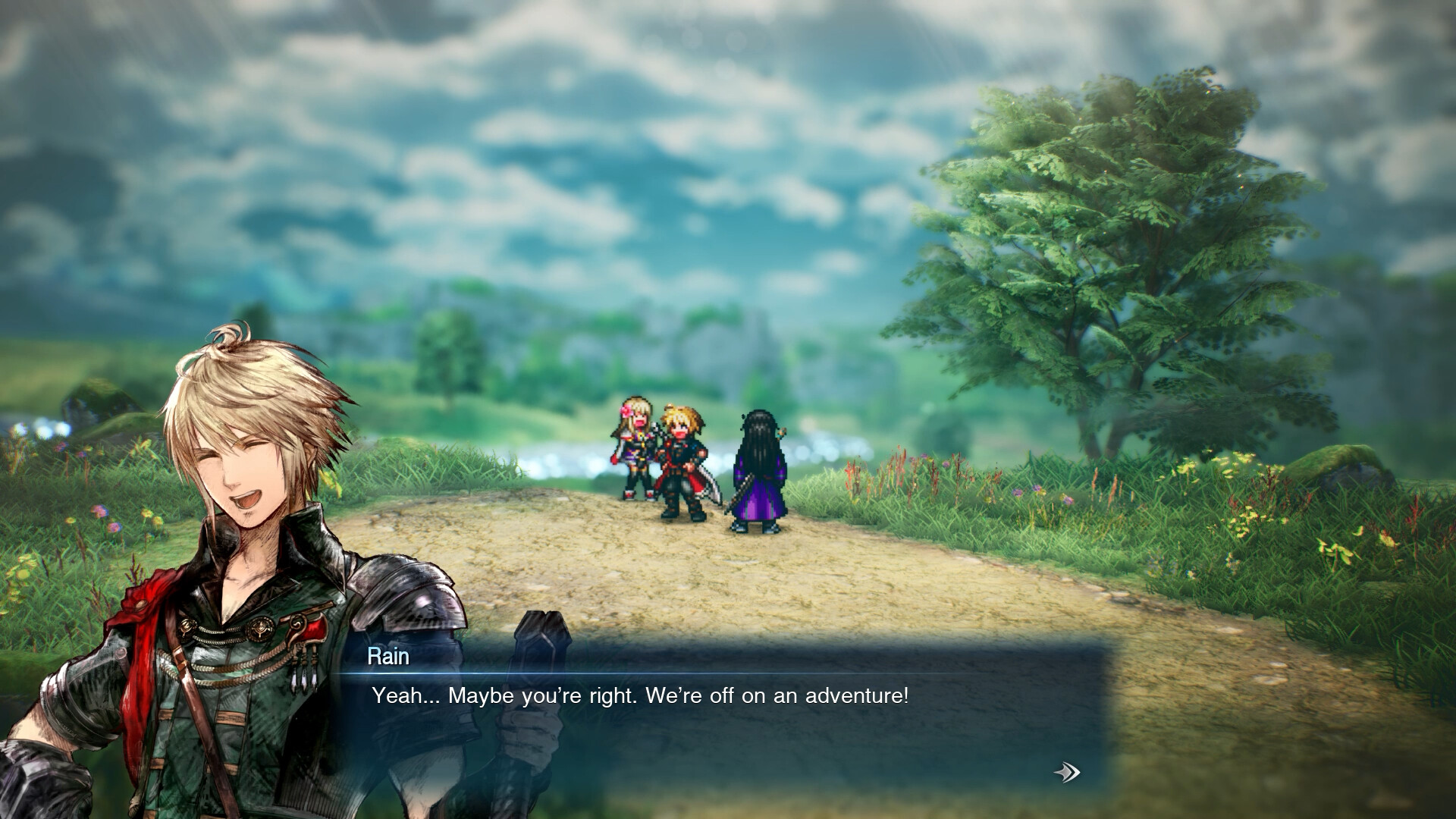
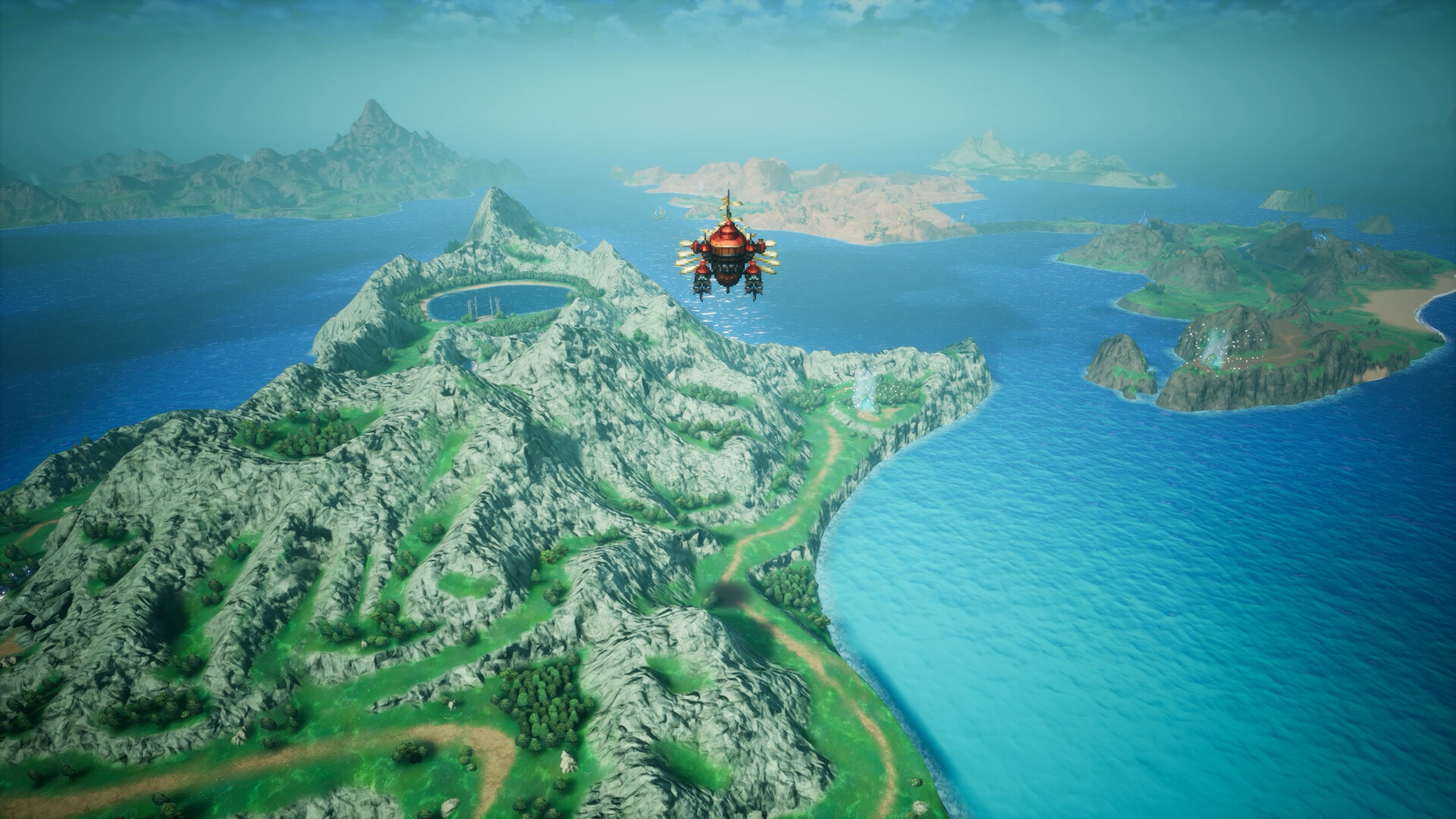
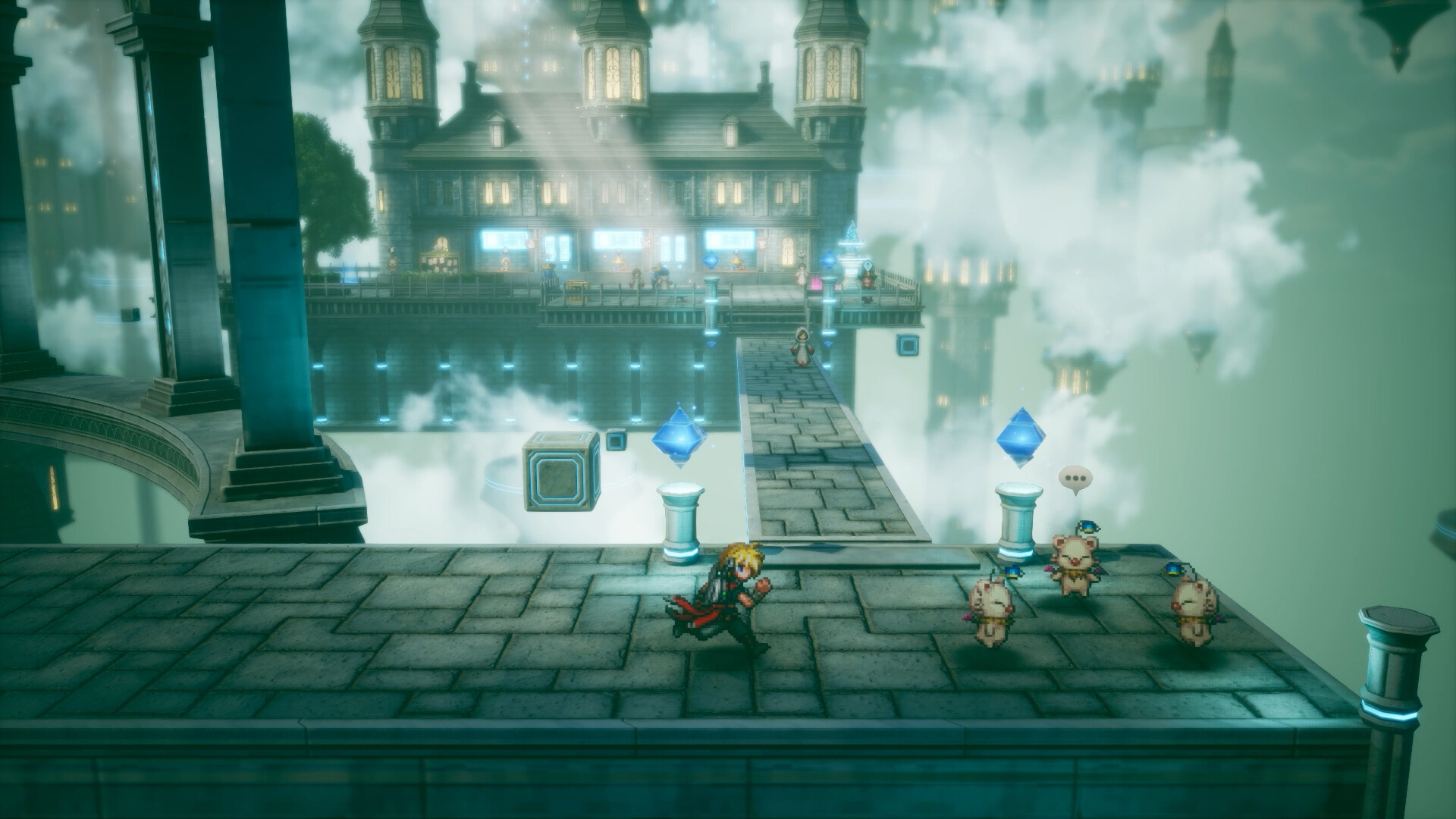
Outside of combat, Final Fantasy Resonance leans into the HD-2D art style the series has used since Octopath Traveler and the Final Fantasy VI/IV HD-2D remasters: detailed pixel-art character sprites moving through fully 3D, cinematically lit environments. Towns, floating structures and open countryside are rendered with the same depth-of-field and lighting work the format is known for, and the game adds full airship traversal across an archipelago-style overworld once you unlock it, letting you fly between regions rather than just walking between them.
6. Familiar Faces: Crossovers and Cameos
Final Fantasy Resonance leans hard into the franchise's 40-year history, and that shows up directly in its cast of Visions and its cast of enemies. Gilgamesh, the recurring multi-armed sword collector who has appeared in numerous mainline Final Fantasy games, shows up as a boss encounter complete with his usual theatrical introduction. Visions based on characters from other Final Fantasy entries — among them Cloud, Lightning, Y'shtola and series mainstays like Bartz and Zidane — let the game cross-pollinate combat styles from across the series' history into one party.
Square Enix has supported the launch with a steady drip of character-specific Vision trailers in the months leading up to release, each one focused on a single legacy character and the Resonance attack their Vision grants. The official gameplay trailer below shows the timeline, stagger and Vision systems in action together.
7. Tips for New Players
A few starting principles hold up based on what's confirmed about the systems above:
- Scout for elemental and physical weaknesses before committing a full turn rotation — since Stagger thresholds are tied to specific weaknesses, attacking blind wastes the turns that would otherwise build toward a break.
- Don't hoard AP on a single Vision. Spreading ability points across a couple of Visions early gives you more flexibility when you need to swap party roles for a specific boss.
- Save Esper calls for when you can capitalize on them — either to push through a dangerous phase or to pile damage onto an already-Staggered enemy, rather than opening a fight with one out of habit.
- Revisit the demo's carried-over save if you played it before launch; progress and unlocked Visions from the demo transfer into the full release.
Final Fantasy Resonance is a strong opening weekend for a new entry that had no guaranteed built-in audience the way a numbered mainline game or a remake would. Between the timeline-based stagger combat, the Vision system's spin on jobs, and Espers acting as genuine battlefield allies rather than a single big attack, it's a combat-first pitch — and reviews so far back that pitch up. The story is the one piece critics keep flagging as the weaker half of the package, so go in expecting the battle system, not the plot, to be the main event.
Official Resources
For more on how other turn-based RPGs build their combat loops, see our breakdown of Genshin Impact's elemental reaction system, or check our tips for building a squad in the tactical RPG Forest Knight. If you're still deciding on editions or want details on the free demo, read our guide to Final Fantasy Resonance's release date, editions and demo. You can also browse our full game walkthrough archive for more guides like this one.