NBA 2K27 MyTEAM Explained: Player XP, the Exchange, Auction House and Limited-Time Modes
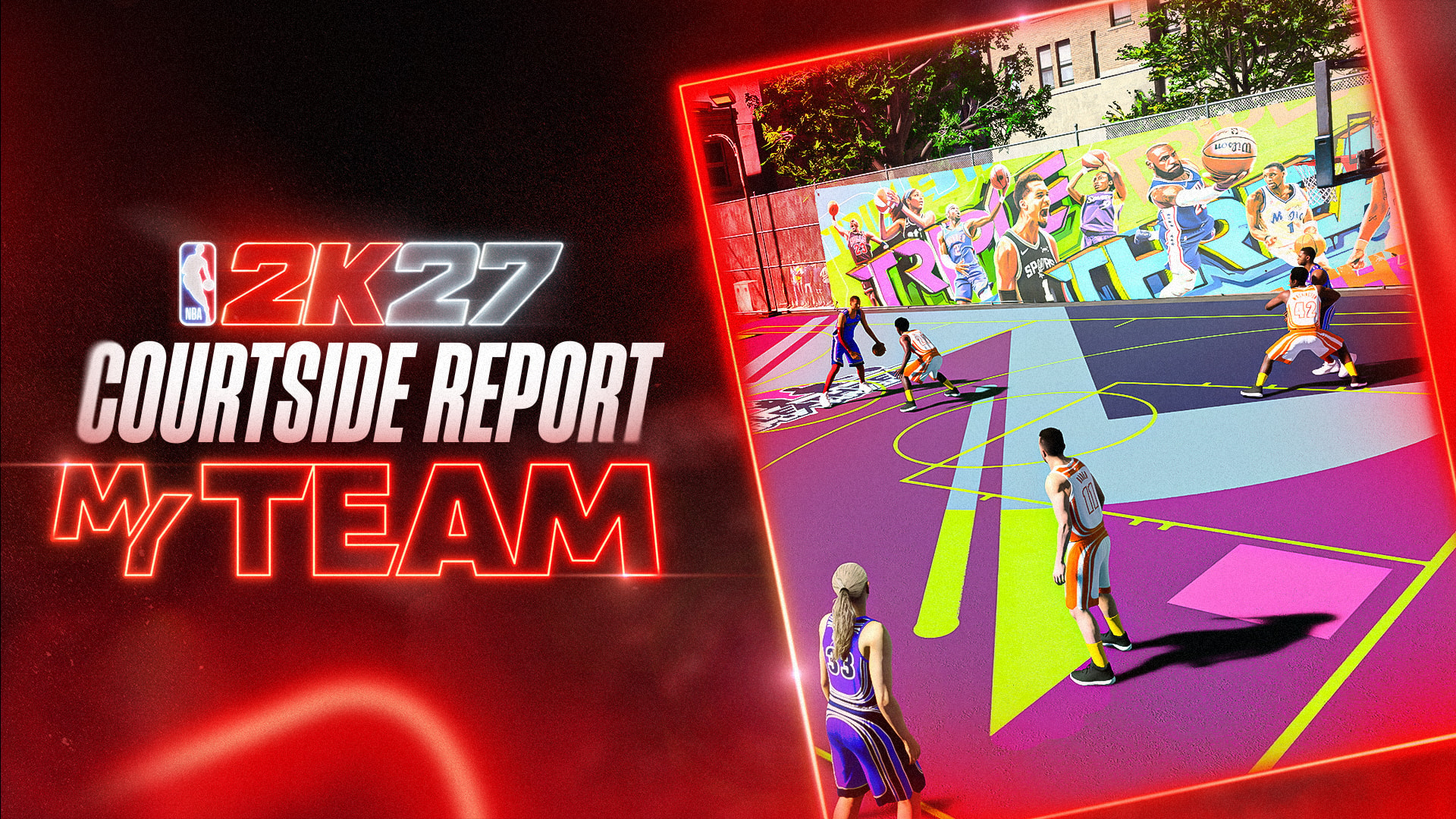
NBA 2K27's MyTEAM got its biggest system overhaul in years: a new Player XP system lets every card level up through play, the Exchange now accepts any card in your collection, and the Auction House is unified across PS5, Xbox Series X|S and Switch 2. Here's exactly how each new system works and where to start.
NBA 2K27 has been out since September 4, and while most of the headlines around launch focused on MyCAREER and the new Dynamic Dunk Meter, 2K also pushed the biggest structural changes MyTEAM has seen in several years. A new Player XP system lets every card you own grow stronger through play, the Exchange finally accepts cards you'd otherwise have sitting dead in your collection, and the Auction House is now a single cross-platform marketplace instead of three separate ones. Here's exactly what changed, how each system works, and where to start if you're building a MyTEAM lineup from scratch this season.
1. What Changed in NBA 2K27's MyTEAM
2K detailed the overhaul in a MyTEAM Courtside Report featuring San Antonio Spurs guard Stephon Castle alongside Visual Concepts developer Jonathan Smith. The headline additions are the Player XP progression layer, an Exchange that now takes any card in your collection instead of a narrow list of eligible ones, and a unified Auction House spanning PlayStation 5, Xbox Series X|S and Nintendo Switch 2. Around those three pillars, 2K also expanded Daily Login rewards, brought back rotating community modes like Triple Threat Online and Clutch Time Online, and added new card tiers and scouting tools.
2. Player XP: Leveling Up Every Card You Own
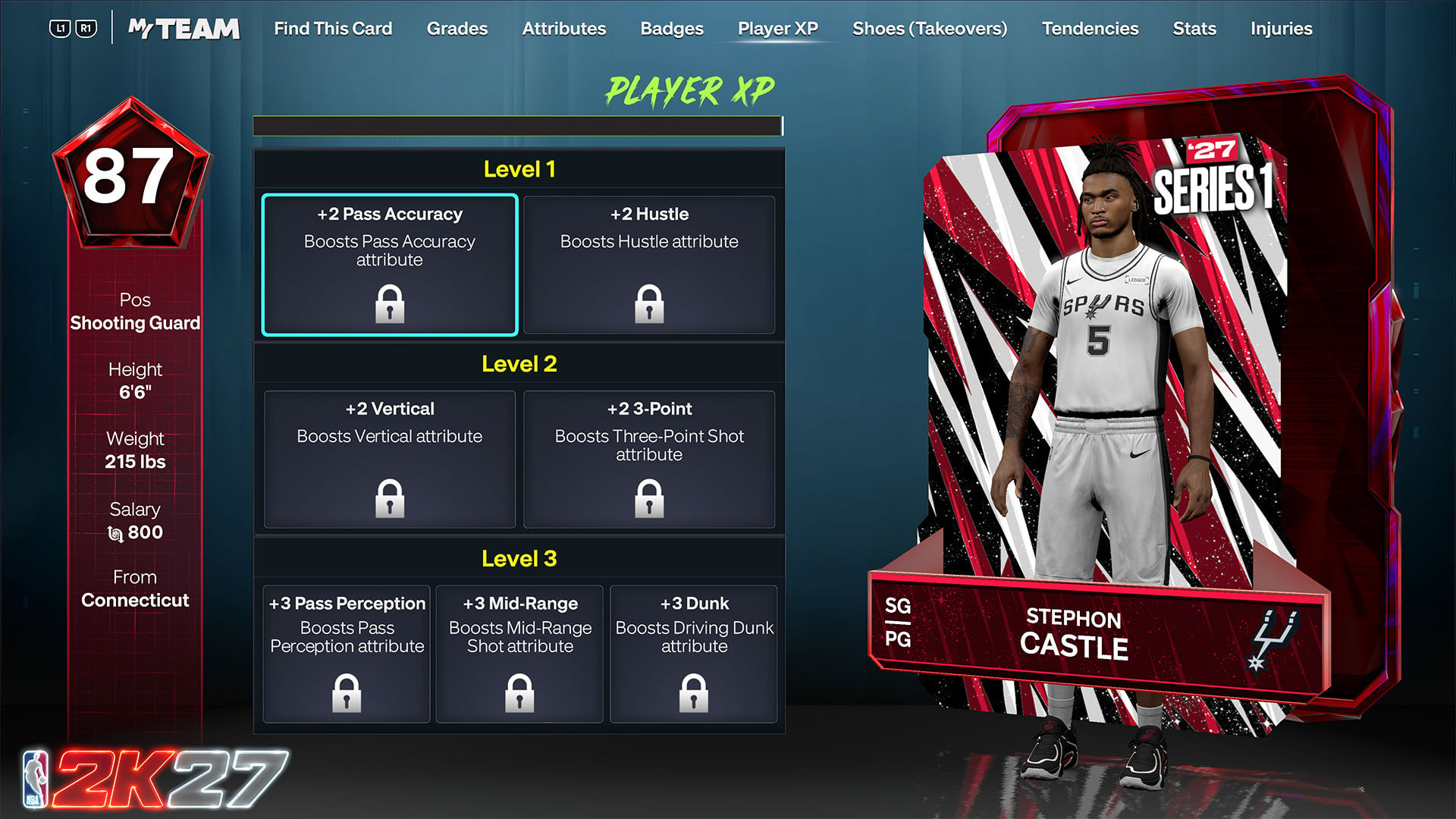
Player XP is the new progression system sitting underneath every card in MyTEAM. Instead of a card's attributes being fixed the moment you pull it, playing well with that card on the court now earns it experience, and stronger performances speed up how quickly it levels. Each level unlocks a small pool of attribute boosts you choose from — things like extra Pass Accuracy, Hustle, Vertical or Three-Point rating at the early levels, expanding into bigger perks such as Takeover activating from the opening tip, a larger turbo meter, and additional badge slots as a card climbs higher.
The system is designed to reward cards you actually use rather than ones that just sit at a high overall rating. 2K also confirmed Player XP progress is tied to your account rather than locked to a single copy of a card, so earned levels can transfer if you move on from one version of a player to a newer one. If you're still working out which players are worth investing that XP into, our guide to how badge tokens and the synergy system interact with MyPLAYER builds covers the badge side of that equation in more detail.
3. The Exchange: Cashing In Cards You'd Otherwise Bench
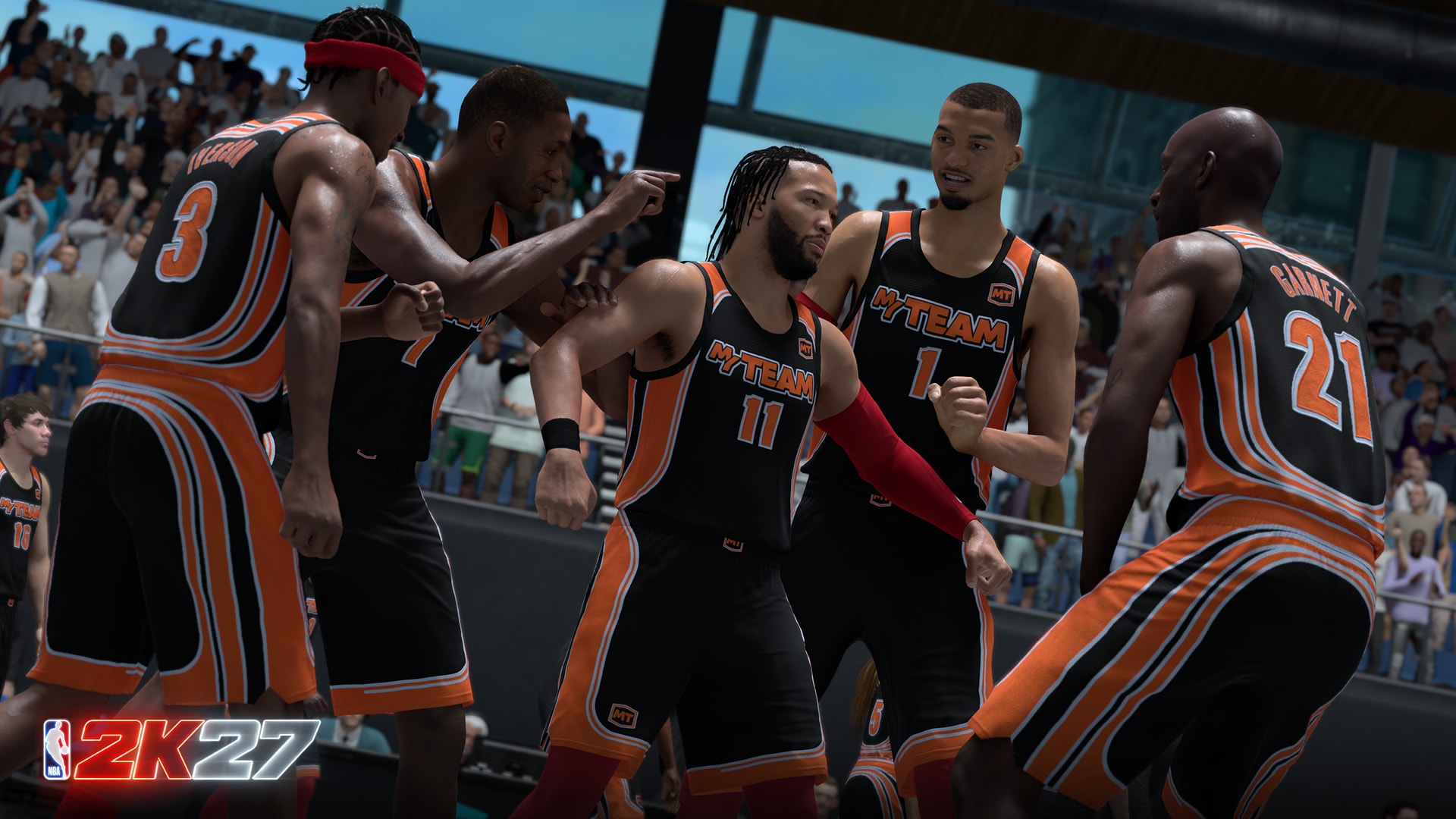
The Exchange has historically only accepted a limited set of duplicate or low-value cards. In NBA 2K27, 2K opened it up so that, for the first time, any Player Card in your collection can be exchanged — including cards you earned through Seasons or already claimed from packs — for rewards. The one exclusion is Free Agent cards, which stay outside the system. Practically, that means a bench of cards you pulled early in a Season and have since outgrown no longer has to just sit in your collection; it becomes tradeable material toward the cards you actually want.
2K frames this as maximizing the value of every card a player pulls, rather than having pack luck decide which cards are "useful" versus dead weight the moment something better comes out. Combined with Player XP, it changes the incentive: a mid-tier card is worth developing right up until you're ready to exchange it rather than the instant a higher-rated version drops.
4. A Real Cross-Platform Auction House
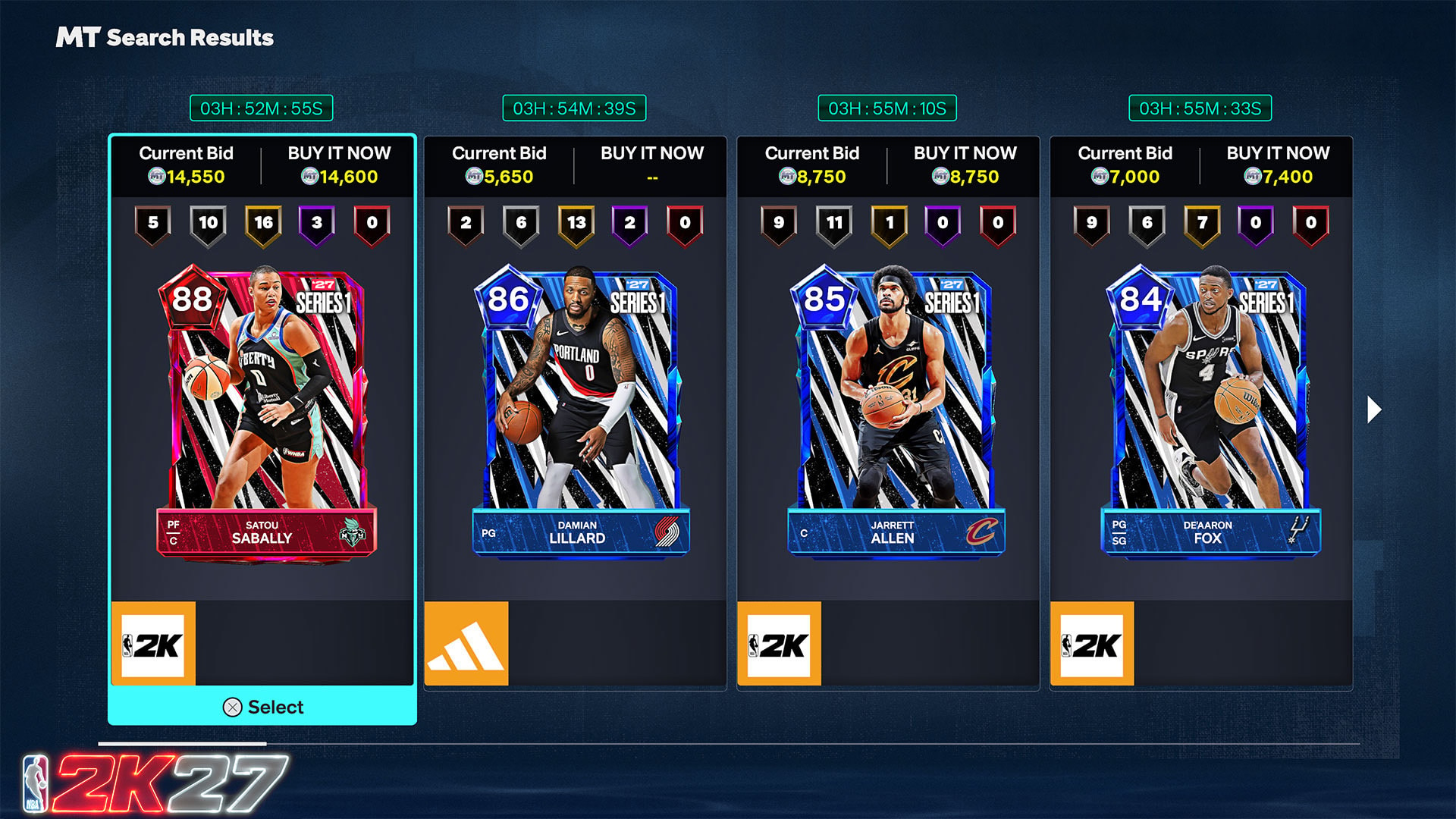
The Auction House is now unified across PS5, Xbox Series X|S and Switch 2 rather than split into separate platform economies. 2K says the goal is greater card variety and more consistent pricing, since buyers and sellers on every platform are now pulling from the same pool of listings. The company also says transactions are "closely monitored" but faster than before — sellers get expedited payouts and buyers get instant access to what they've purchased, rather than waiting through a delay window.
For anyone who plays on Switch 2 in particular, this is a meaningful change: smaller platform populations used to mean thinner markets and worse prices, and a single cross-platform pool should smooth that out. If you're deciding which cards to chase on the market versus pull from packs, it's worth cross-referencing against the Dynamic Dunk Meter and Takeover changes, since those affect which archetypes are worth bidding up right now.
5. Daily Login Rewards: Daily, Streak and Lifetime Tiers
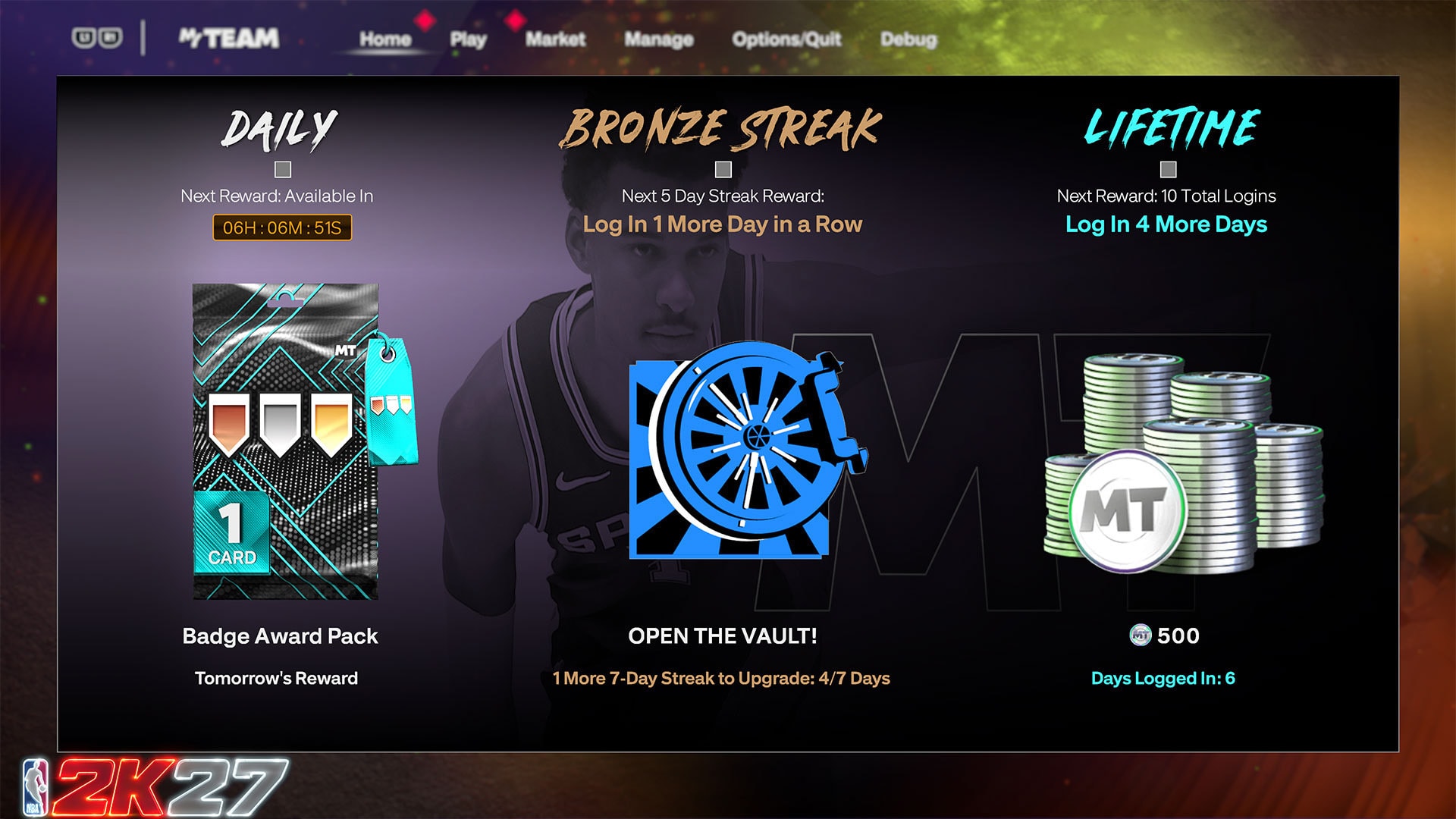
MyTEAM's login incentives were expanded into a three-tier structure. There's a straightforward Daily reward for logging in, a Streak track that pays out extra at three, five and seven consecutive days (2K calls the early milestones "Bronze," "Silver" and so on as the streak climbs, escalating toward vault-style bonus openings the longer you keep it going), and a separate Lifetime track that counts your total login days over the life of the game and pays out at cumulative milestones like ten total logins, independent of whether your daily streak ever breaks.
That Lifetime layer is the more meaningful change for casual players — missing a day used to reset your progress toward bigger rewards entirely, but now a lapsed streak only costs you the Streak-tier bonus, not your Lifetime progress. If you're building out a full roster rather than just farming login packs, our breakdown of the Season 1 rewards ladder and Pro Pass lays out how these MyTEAM rewards line up against MyCAREER's separate track.
6. Rotating Multiplayer Modes Are Back
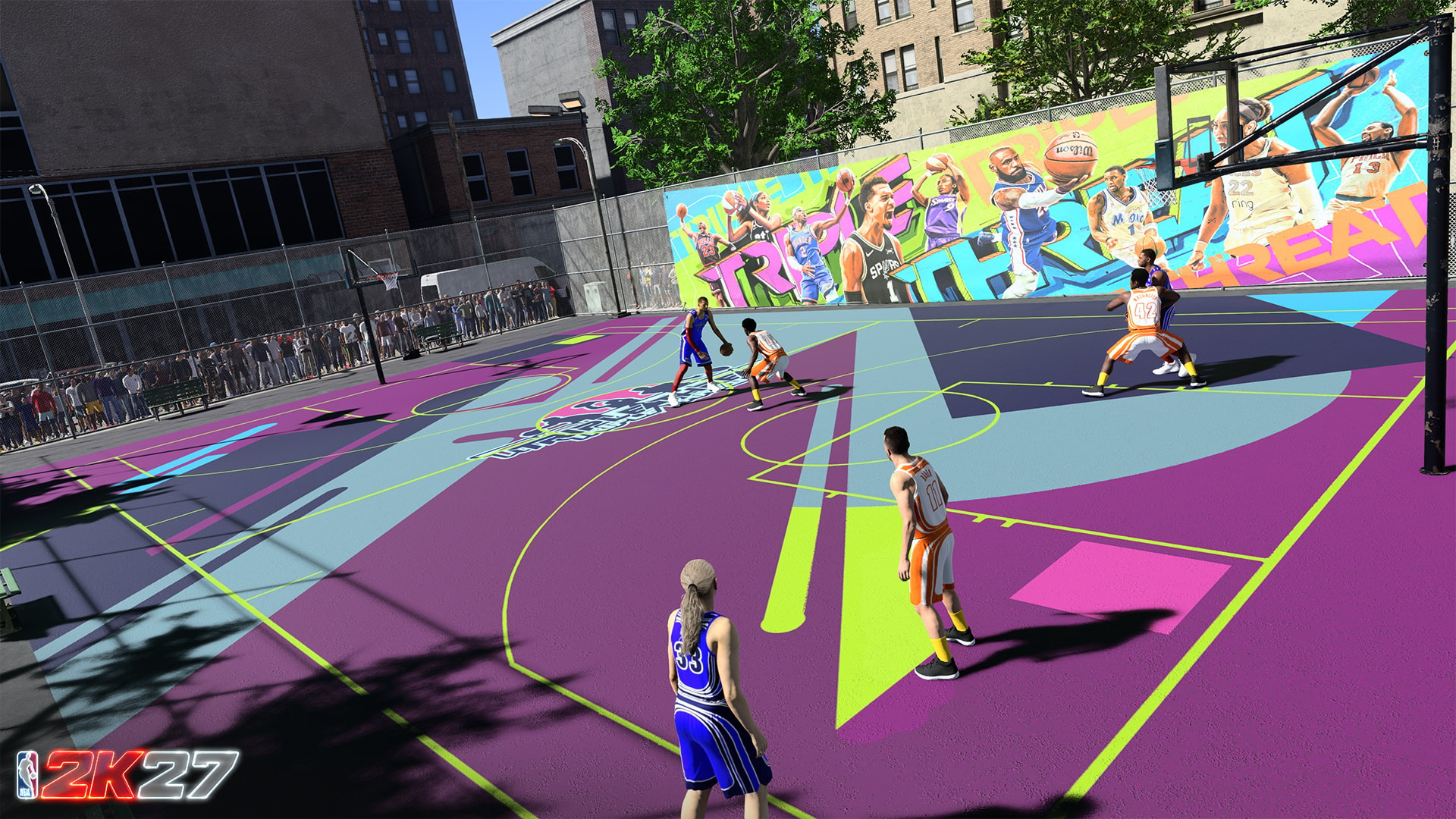
Two fan-favorite modes return as part of a rotating slate: Triple Threat Online and Clutch Time Online, alongside Limited and Salary Cap variants of MyTEAM's competitive modes. Rather than all being permanently available at once, 2K is rotating this slate throughout the year through weekend events, limited-time Festivals and full in-season runs, similar to how the base game's Season structure already works. Triple Threat also gets a nighttime streetball venue — Triple Threat Park — as a visual change to the mode's usual courts.
Because availability rotates, it's worth checking MyTEAM's Play tab regularly rather than assuming a mode you want is always on; 2K's approach here mirrors the event cadence already covered in our guide to MyCAREER's Eras system and the MyPLAYER builder, where content is similarly staged rather than all unlocked on day one.
7. Card Discovery, Parallels and Smaller Additions
A few smaller systems round out the update. Card Discovery adds scouting reports that give more information about a card before you commit resources to it, which is aimed at reducing guesswork when the Exchange and Auction House both give you more to weigh. Breakout progression — the mode that lets lower-tier cards climb toward stronger versions of themselves through play — was expanded, and Gauntlet now supports infinite runs instead of stopping after a fixed number of games, so a hot run can keep paying off instead of being cut short.
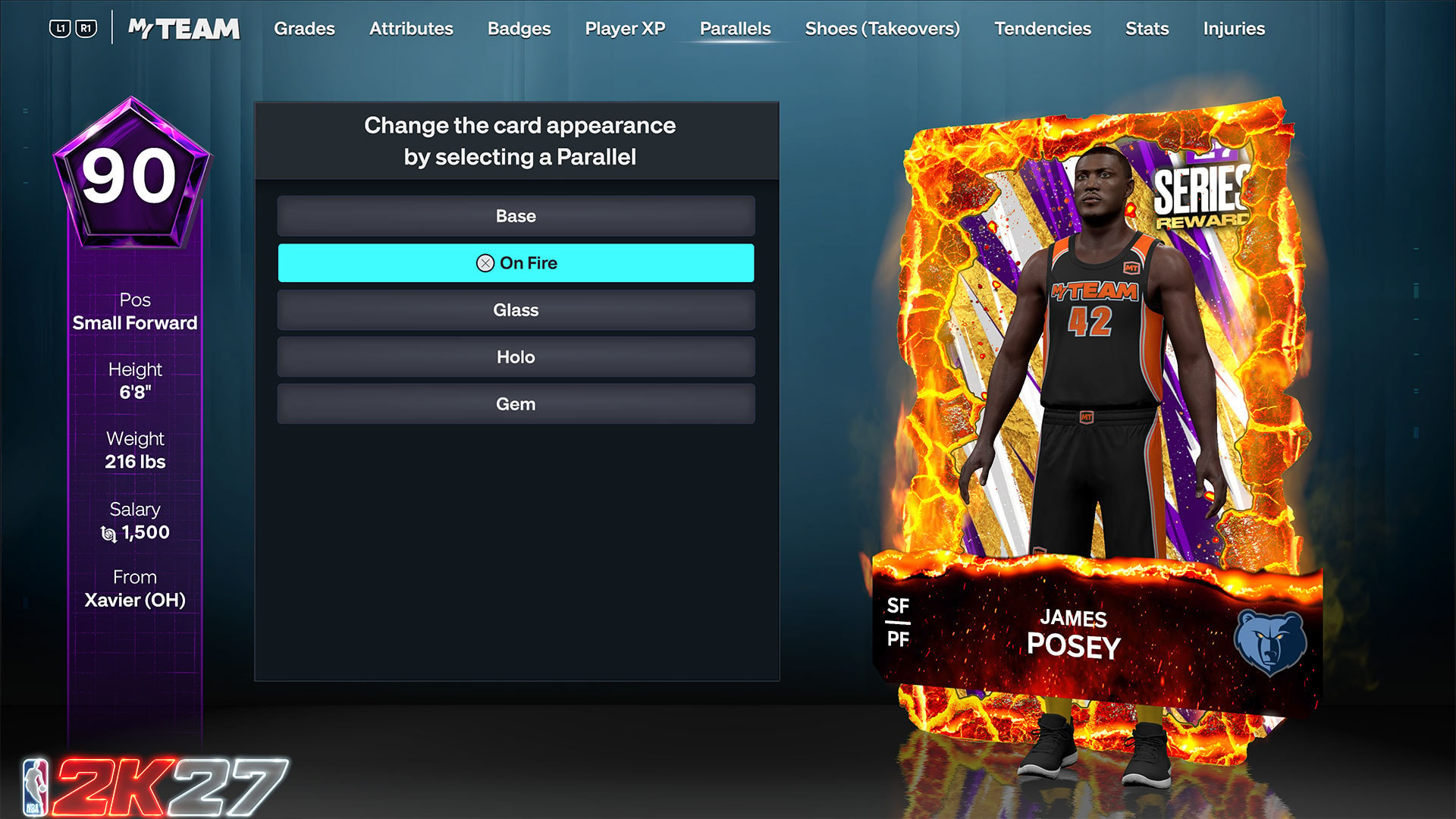
2K also introduced new Player Card Parallel designs — Glass, Gem, Holo and On Fire — as additional visual and collectible variants layered on top of existing card tiers. None of these change how MyTEAM is played at a fundamental level the way Player XP or the Exchange do, but together they give collectors more to chase across a season.
8. Quick Tips for Jumping Into MyTEAM Now
- Don't dump cards you're not using yet. With the Exchange now accepting any Player Card, holding onto a bench piece a little longer costs you nothing and gives you more Exchange material later.
- Play your cards before you decide they're replaceable. Player XP only grows through use, so a card sitting unplayed in your lineup builder is a card falling behind on levels.
- Check the Auction House before opening packs for a specific need. The unified cross-platform market means better odds of finding the exact card and price you want compared to a single-platform pool.
- Log in even on days you don't have time to play a full game. The Lifetime reward track keeps counting regardless of your Streak status, so a quick login still banks progress.
- Watch the Play tab for rotating modes. Triple Threat Online and Clutch Time Online aren't permanent fixtures, so plan around their scheduled windows rather than assuming they're always live.
MyTEAM in NBA 2K27 is a noticeably more forgiving system than in past years — cards you already own are worth more for longer, the market is deeper, and login rewards don't punish an off day as harshly. Browse the full walkthroughs.net game guide archive for more NBA 2K27 coverage.
Official Resources
- NBA 2K27 MyTEAM — official feature page
- 2K Newsroom: NBA 2K27 MyTEAM announcement
- NBA 2K27 official patch updates hub