Genshin Impact's Imaginarium Theater Explained: Unlock Requirements, Season Rules and Rewards

Genshin Impact's Imaginarium Theater is a free monthly endgame mode that restricts which elements you can bring, hands out a top-tier free character each season, and pays Primogems without requiring a perfect clear. Here's how to unlock it, how the Vigor and Season Rules systems work, and what November's Hydro, Electro and Geo cycle changes.
Genshin Impact has no shortage of endgame content, but one mode rarely gets the spotlight that the Spiral Abyss does: the Imaginarium Theater. It's a free, monthly-resetting combat challenge that rotates which elements you're allowed to bring, hands you a free top-tier "guest star" character for the run, and pays out in Primogems whether or not you play perfectly. Here's exactly how it works, how to unlock it, and what the current cycle looks like.
1. What Is the Imaginarium Theater?
The Imaginarium Theater is a permanent endgame mode built around staged "performances" rather than straightforward damage checks. Instead of picking four characters and clearing fixed chambers like the Spiral Abyss, you assemble a larger roster, work through a sequence of combat and non-combat "Events," and are graded on how efficiently you clear each stage. The whole season resets on the first of every real-world month, with a new theme, a new restricted set of elements, and a new rotating cast of free trial characters.
It sits alongside Genshin's other long-running challenge modes — if you haven't already read our breakdown of Genshin's other major endgame gauntlet, the Spiral Abyss, the two modes are designed to test different skills: the Abyss rewards raw team damage, while the Theater rewards flexibility across a wide cast.

2. How to Unlock the Imaginarium Theater
The Theater requires reaching Adventure Rank 35. Once you're there, the entry point is a secret room in Mondstadt's library — interacting with the book on the table inside triggers the quest that opens the mode permanently. From then on, a new icon on the world map lets you jump straight into the current season whenever it's active.
Unlike story quests, there's no need to replay the unlock sequence each month. Once it's open, you can freely enter and exit between Acts, adjust your Principal Cast, and retry a stage as many times as you like before locking in a result.

3. Building Your Principal Cast and the Vigor System
Before each run you select six characters to form your Principal Cast. Every character carries two points of Vigor, and losing a character to defeat — or simply using them across stages — draws down that pool. Once a character's Vigor is spent, they're benched for the rest of the run, which is the Theater's way of forcing you to actually use your whole roster instead of running one deathless team the entire way through.
This is also why building out a wider pool of leveled characters pays off here more than almost anywhere else in the game. If your account's roster is thin, pulling new units through Genshin's wish system and its pity mechanics is the long-term fix, but the mode is generous enough with free trial characters that even newer accounts can clear the lower difficulties.
4. Combat Events, Companion Events and Guest Stars
Each Act is broken into a handful of staged "Events." Combat Events are straightforward battles against waves of enemies or a boss, scored on clear speed and how much damage you take. Companion Events are non-combat stops between fights where you can add a bonus character to your Principal Cast mid-run, occasionally for free, which is one of the only ways in the game to temporarily field more than four party members' worth of options across a single challenge.
Every season also includes a Special Guest Star: a fully leveled, fully built trial character handed to every player for free, regardless of whether they actually own that unit. It's a deliberate way to let the whole playerbase experience a strong five-star's kit at max investment, at least for the month. Trial characters like this come pre-equipped with strong artifacts and talent levels, which is also a useful, low-pressure way to test-drive a unit you're considering pulling for before spending any Primogems on their banner.
5. Season Rules: Why the Allowed Elements Change Every Month
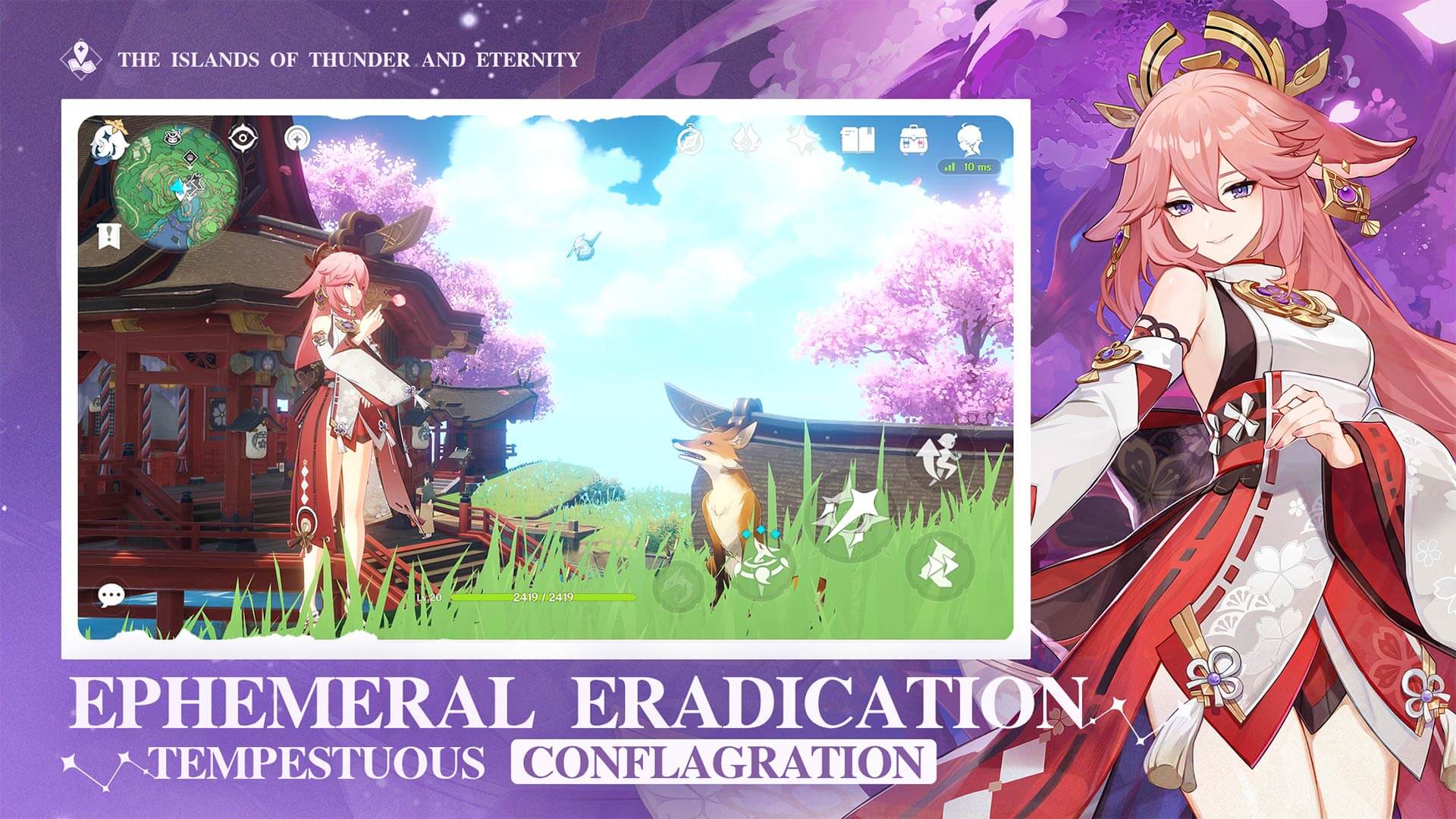
The mode's defining twist is its Season Rules: each monthly cycle only allows characters of two or three specific elements (plus any Special Guest Star, who ignores the restriction). That naturally limits which elemental reactions you can lean on — a Pyro-and-Electro season plays very differently from a Hydro-and-Cryo one — and it's the main reason the Theater rotates its "best teams" lists every month, unlike the Spiral Abyss' more stable meta.
Since every one of Teyvat's seven nations is built around a dominant element, the Season Rules effectively decide which regions' characters get to shine each month, and which ones sit out entirely no matter how strong they are on paper.
6. The Current Season: Hydro, Electro and Geo
The Theater's season tied to Version 7.2, "Hour of Ruin," which arrived on November 4, runs from November 1 through December 1 and restricts the Principal Cast to Hydro, Electro and Geo characters. That trims out crowd-pleasing options like Vaporize and Melt-focused Pyro teams for the month, and instead pushes toward Electro-Charged and Crystallize-style compositions built around Hydro's application and Geo's shielding.
If you're building toward this cycle specifically, prioritize characters who can apply their element reliably off-field, since the restricted roster means you'll have fewer characters able to cover any gaps in elemental coverage than in an unrestricted team.

7. Rewards: Primogems, Fantasia Flowers and the Prop Shop
Clearing Acts pays out Primogems at multiple difficulty thresholds, and critically, those rewards aren't locked behind a flawless, no-damage-taken clear — getting through a stage at all is enough to claim the Primogem reward tied to that difficulty. Higher difficulties simply pay out more.
Alongside Primogems, clears also earn Fantasia Flowers, the mode's dedicated currency, spendable in the in-mode Prop Shop for cosmetic rewards: namecards, profile decorations and Serenitea Pot furnishings themed around that season's story. None of it is time-limited to that specific month in the way the Season Rules are — the shop's stock simply refreshes as new seasons roll in.
Because the Prop Shop's catalog is cosmetic rather than power-related, there's no pressure to clear every difficulty the moment a season opens. Progress and currency earned mid-season carry you through to the reset, so it's entirely reasonable to chip away at harder stages across several play sessions rather than treating the mode like a one-sitting race.

8. Tips for Clearing Higher Difficulties
- Spread your Vigor deliberately. Since every character only has two uses before they're benched, decide up front which fights each half of your Principal Cast is meant to handle rather than defaulting to your strongest four.
- Take the free Companion Event characters. They cost nothing to add and often patch a hole in your team's elemental coverage for exactly the fights where you need it.
- Build toward the season's restricted elements in advance. Checking next month's Season Rules ahead of time (they're previewed before each reset) lets you farm artifacts and talents for the right characters instead of scrambling once the cycle flips.
- Don't chase a Perfect Performance on your first clear. Since the Primogem reward doesn't require it, it's usually faster to clear a difficulty safely first and go back for a cleaner run afterward if you want the cosmetic rewards from a higher Fantasia Flower total.
Official Resources
The Imaginarium Theater is one of the few places in Genshin Impact that actively rewards owning a wide bench of characters rather than a single maxed-out team, and its monthly Season Rules keep the "best" lineup from ever settling into a solved meta for long. For more on building that bench, from banners to gear, browse the rest of our Genshin Impact guides archive.